Baked Chicken Breast
A lean cut with a three-minute margin. Everything here is about widening that margin.
Total: 50 minYield: 4 servingsMethod: Baking
In this recipe
What actually goes wrong
Chicken breast is around 75% water and almost fat-free. Its muscle proteins start contracting at about 140°F and squeeze that water out steadily as the temperature climbs. At 165°F it is safe and still juicy; by 175°F a meaningful share of the moisture has been forced out and there is no fat left behind to disguise it.
That is a narrow band, and on an 8-ounce breast it amounts to roughly three minutes in a hot oven. Almost every dry chicken breast is a timing problem rather than a recipe problem.
Two things widen the band. Even thickness means the whole piece passes through that range together instead of the thin end arriving ten minutes early. And a brine adds water and salt to the muscle before cooking, so there is more to lose before it reads as dry.
The fifteen-minute brine
A quick brine is optional but it is the highest-return fifteen minutes in this recipe. Three things happen in the bowl.
- 01Salt moves inIt seasons the meat all the way through rather than sitting on the surface, which is why the rub afterwards carries almost no salt of its own.
- 02The muscle holds more waterSalt changes how the proteins bind water, so the breast goes into the oven carrying more than it started with. That is the buffer against overcooking.
- 03There is a time limitFifteen to thirty minutes is the window. Past an hour in a brine this strong the texture turns spongy and faintly cured — a real fault, not a matter of taste.
Twenty minutes at 425°F
High heat is deliberate. A moderate oven gives the interior longer to dry out before the outside does anything.
- Surface setsThe rub darkens and the exterior firms. Nothing useful is happening inside yet.
- The climbThe center moves through the 140s and 150s. This is where the moisture loss begins and where the clock starts mattering.
- First checkThermometer into the thickest part, not the middle of the pan. Many breasts are done here.
- The marginIf it reads under 165°F, give it two more minutes and check again. Guessing at this stage is what produces dry chicken.
- RedistributionJuice that would run onto the board settles back through the meat. Slicing immediately undoes some of the work the brine did.
Troubleshooting
| Problem | Cause | Fix |
|---|---|---|
| One end is dry and the other is barely done | The breast was not pounded even. | Pound the thick end to match the thin one. This is the single biggest fix available. |
| It is dry throughout | Overshot 165°F. | Check at 18 minutes and use a thermometer rather than a clock. Ovens vary more than recipes admit. |
| The rub did not brown | The chicken went in wet from the brine. | Rinse and pat thoroughly dry before the rub goes anywhere near it. |
| The texture is spongy | Brined too long. | Fifteen to thirty minutes. This brine is strong by design and is not meant to run for hours. |
| It tastes bland despite the rub | The brine was skipped and the rub was left at its low salt level. | If you skip the brine, salt the breasts separately — about 1/2 tsp kosher salt each — before the rub. |
Storage and reheating
Refrigerate up to 4 days, sliced or whole. Whole keeps better; every cut surface is somewhere moisture can leave.
Reheat to 165°F (74°C), the USDA safe temperature for leftovers, covered at 300°F with a spoonful of broth in the dish. A microwave on full power drives water out of lean chicken faster than almost anything else you can do to it.
Cold leftover breast is genuinely the better option — sliced into salads, sandwiches or grain bowls it needs no reheating and none of the risk that comes with it. It freezes for 3 months, though it comes back noticeably firmer.
Baked Chicken Breast
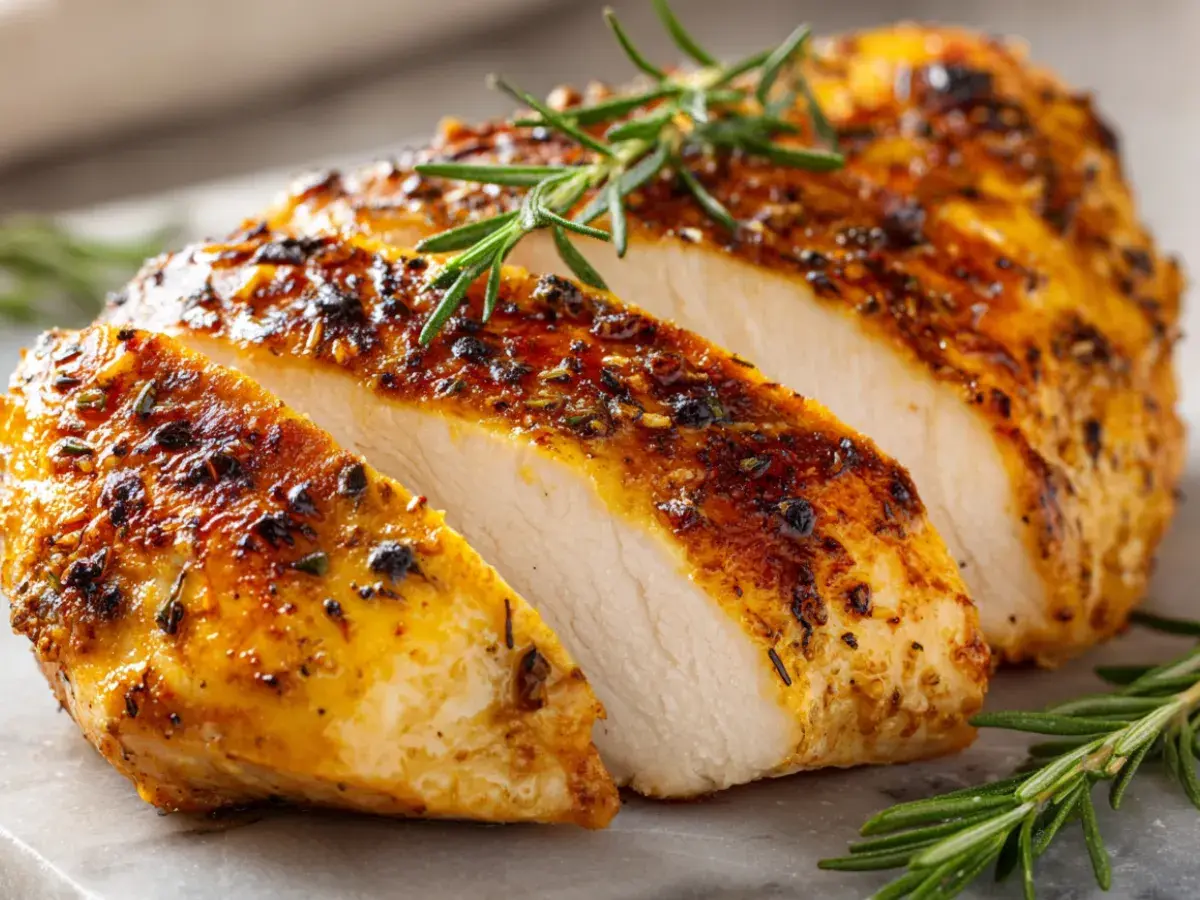
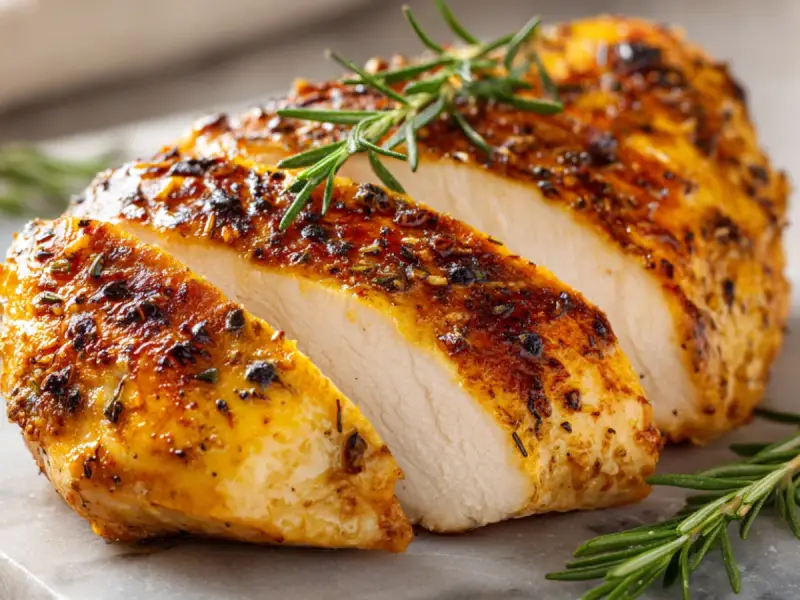
Boneless breasts brined briefly, pounded to an even thickness, and roasted hot and fast under a paprika-and-garlic rub. High heat and a short clock are what keep a lean cut from drying out.
- Chicken
- Main Dish
- Baking
Cook’s checkpoint
- Frying oil
- 350°F / 175°C
- Chicken, thickest part
- 165°F / 74°C
Use a food thermometer. Color and time alone don’t confirm poultry is done.
Ingredients
For the quick brine
For the rub
To serve
Instructions
Notes
- Some cooks pull chicken at 160°F and let carryover heat carry it to 165°F during the rest. That works, but it depends on knowing your oven and your thermometer; 165°F measured is the figure with an authority behind it.
- Skip the brine if you are short on time and the result is still good — just noticeably less forgiving if you overshoot by a couple of minutes.
Cooking Mode
Questions
- What oven temperature is best for chicken breast?
- 425°F. Hot and fast limits how long the interior spends losing moisture. Lower temperatures are more forgiving on timing but produce a drier result overall, which is the opposite trade to the one most people want.
- Is the brine really necessary?
- No, and the recipe works without it. It buys margin rather than flavor — brined chicken tolerates being a couple of minutes late far better than unbrined chicken does.
- Can this be done with bone-in, skin-on breasts?
- Yes, and they are more forgiving. Same 425°F but 30 to 35 minutes, still to 165°F measured against the bone without touching it.
- Why pound the chicken if it is being baked and not fried?
- Because thickness governs how evenly it cooks regardless of method. An untouched breast is often twice as thick at one end, which guarantees one part overcooks while the other catches up.