Cheeseburger Soup
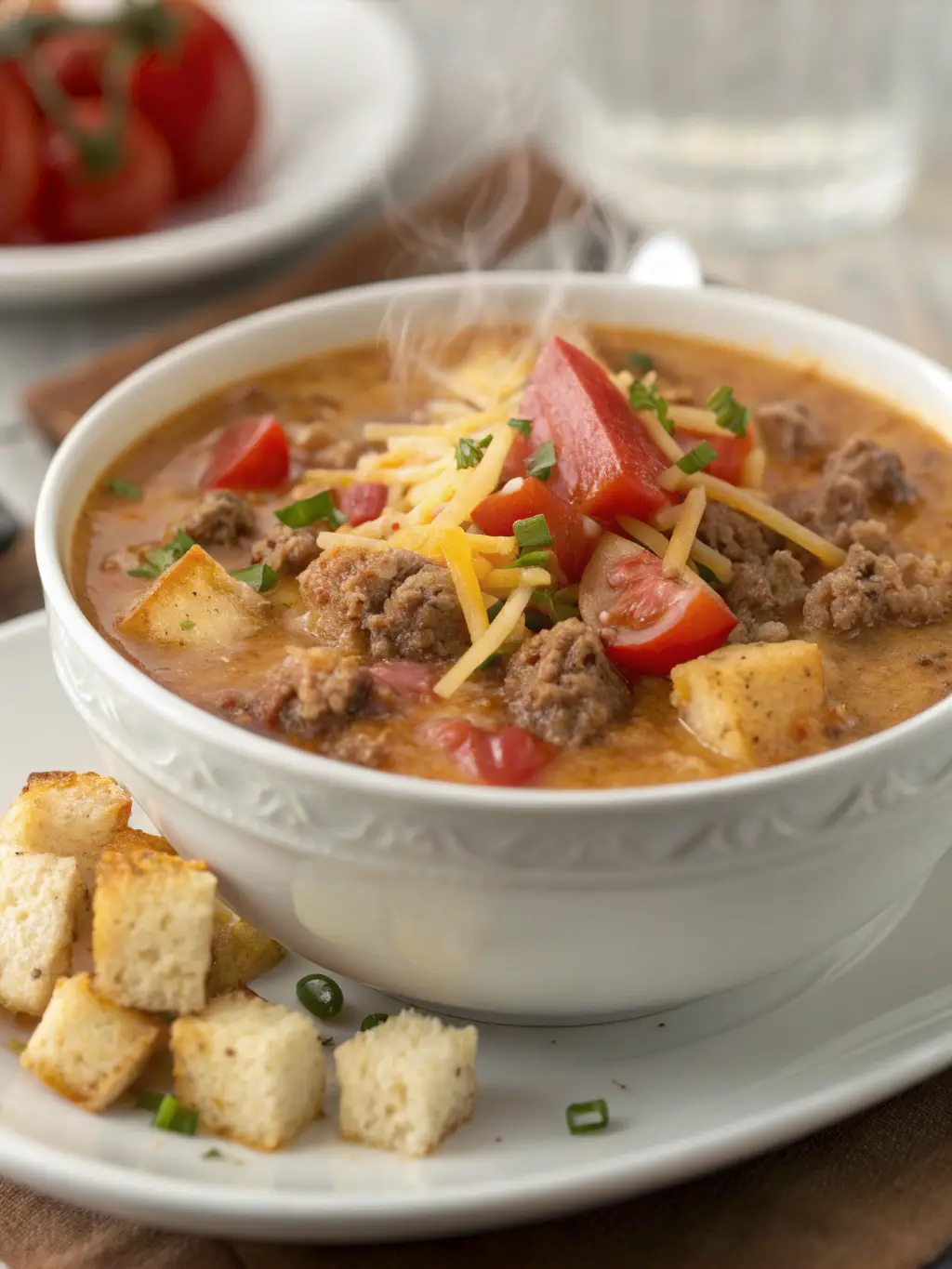
A roux, a bare simmer, and cheese added off the heat — three points where this soup either stays smooth or turns grainy.
Total: 55 minYield: 6 servingsMethod: Stovetop
In this recipe
Why there is a separate saucepan
It would be simpler to sprinkle flour over the vegetables and pour the liquid in. It also produces lumps, because flour hitting hot liquid seizes on contact before it can disperse.
A roux made separately — butter melted, flour whisked in, cooked two minutes, milk added gradually — gives a smooth thickened base every time, and the two minutes of cooking removes the raw-flour taste that otherwise sits underneath everything else in the bowl.
The color tells you when it is ready: raw flour paste is chalky white, and at two minutes it turns pale gold and smells faintly of biscuits. Much past that and it starts losing thickening power, which is a different problem.
The order the pot is built
Each stage has to finish before the next begins, and the last one happens off the heat.
- Beef, then outBrowned and drained. Leaving it in while the vegetables cook means it stews in its own liquid and loses the crust that gives the soup its savory base.
- Vegetables in the beef potThe browned bits left behind dissolve into the onion, carrot and celery. This is free flavor and the reason not to wash the pot.
- Broth and potatoTen to twelve minutes, no more. Potato cooked past tender starts shedding starch and clouding the soup.
- Roux and milk, joined inThe base thickens the moment they meet. From here the soup should never exceed a bare simmer.
- Off the heat, then cheeseThe pot is hot enough to melt two cups of cheddar without any burner at all. This is the whole trick.
Texture checkpoints
- The potato cube testA knife tip should slide in with slight resistance, not fall through. Fully soft at this stage means mush by serving, because the soup keeps cooking off the burner.
- The spoon coatAfter the milk goes into the roux, draw a finger across the back of a spoon. A line that holds means it is thick enough to carry the rest of the pot.
- Bubbles at the edge onlyOnce dairy is in, look for small bubbles around the rim. A rolling boil in the middle will split the soup.
- Cheese in handfulsTwo cups dumped in at once cools the pot below melting point and clumps. Three or four additions, stirring between, gives a smooth finish.
Troubleshooting
| Problem | Cause | Fix |
|---|---|---|
| The soup is grainy | Cheese was added over direct heat, or it was pre-shredded. | Take the pot off the burner first, and grate from a block. |
| It tastes of raw flour | The roux was not cooked long enough. | Two full minutes of whisking before any liquid goes in. |
| There are lumps | Milk went into the roux too fast. | Add a splash, whisk smooth, then the rest. The first splash is the one that matters. |
| It separated into grease and liquid | It boiled after the dairy went in. | Keep it at a bare simmer. A split soup can sometimes be pulled back with a splash of cold milk whisked in off the heat. |
| It tastes flat and heavy | The pickles and tomato were treated as optional. | They are the acid in the bowl. Without them this is four rich ingredients with nothing pushing back. |
Storage and reheating
Refrigerate up to 3 days. It thickens considerably as it cools — that is the potato starch and the roux setting, not a fault.
Reheat to 165°F (74°C), the USDA safe temperature for leftovers, over low heat with a splash of milk to loosen it. Do not let it boil on the way back up or the cheese will separate the second time around.
Freezing is not recommended. A roux-and-cheddar base breaks on thawing and the potato turns mealy; nothing stirred in afterwards recovers it.
Cheeseburger Soup
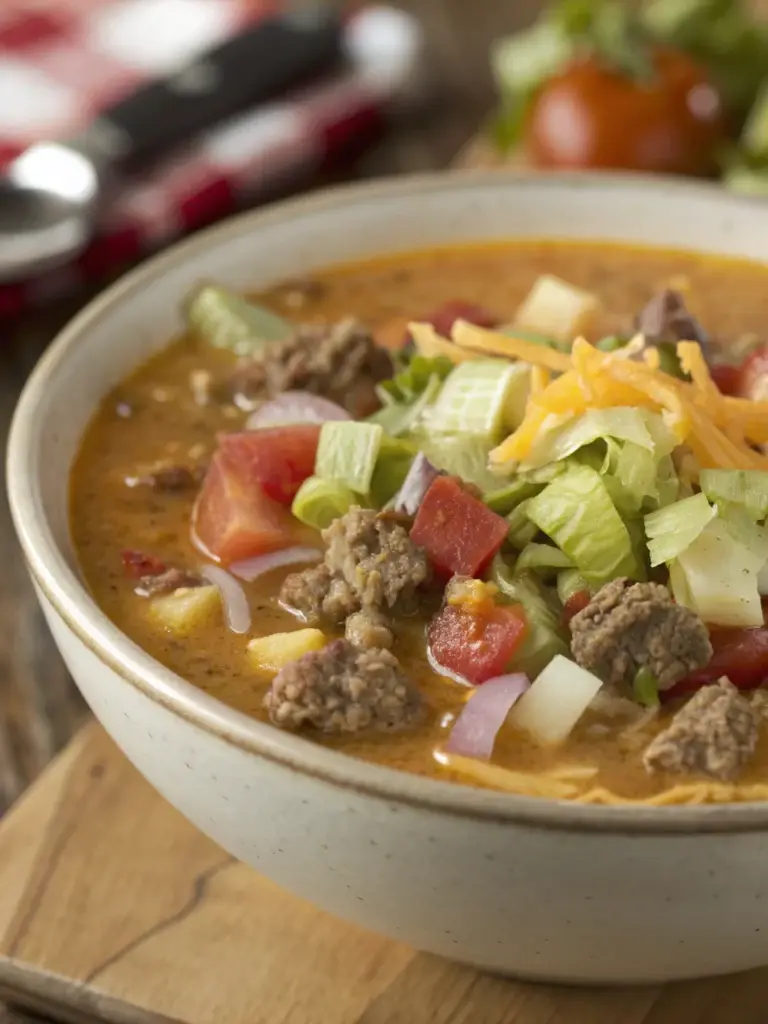
Ground beef and diced potato in a butter-and-flour roux thickened with broth and milk, finished off the heat with grated sharp cheddar. The cheese goes in last and never boils.
- Beef
- Main Dish
- Stovetop
Cook’s checkpoint
- Frying oil
- 350°F / 175°C
- Chicken, thickest part
- 165°F / 74°C
Use a food thermometer. Color and time alone don’t confirm poultry is done.
Ingredients
For the beef and vegetables
For the soup base
To finish
Instructions
Notes
- Grate the cheddar from a block. Pre-shredded cheese is coated in anti-caking starch, which makes the soup grainy no matter how carefully you add it.
- The pickles and tomato are not garnish for its own sake — they are the acidity that keeps a pot of beef, potato, butter and cheese from tasting flat.
Cooking Mode
Questions
- Can this be made with ground turkey?
- Yes, and it then needs to reach 165°F (74°C) rather than 160°F — ground poultry carries a higher safe minimum than ground beef. Expect a lighter flavor; a little Worcestershire helps replace what the beef fat was doing.
- What potato works best?
- A waxy potato such as Yukon Gold holds its cubes through the simmer. Russets break down and thicken the soup further, which some cooks want and others do not.
- Can the cheese be reduced?
- Down to about a cup and a half without the texture suffering. Below that the roux is doing nearly all the work and it reads as potato soup with beef in it.
- Why chicken broth in a beef soup?
- It is lighter, and it lets the beef and cheddar stay in front. Beef broth works but pushes the soup darker and more savory, closer to a stew.