Creamy Chicken Lasagna
A white lasagna stands or falls on moisture control — the spinach, the ricotta binder and the rest before cutting are all the same problem.
Total: 1 hr 30 minYield: 8 servingsMethod: Baking
In this recipe
How the dish is stacked
Four noodle layers, three fillings between them, and a deliberate order.
- Plain sauceHalf a cup, no more. It stops the first noodles sticking and drying, and a thicker pool here makes the bottom layer soupy.
- Noodles, chicken sauce, ricotta, mozzarellaThe same sequence three times. Ricotta goes on in spoonfuls and is spread gently rather than smoothed flat — dragging a spatula across it tears the noodles underneath.
- Noodles, plain sauce, both cheesesThe last noodles get the remaining plain sauce spread right to the edges. Any noodle left exposed turns to leather in a 375°F oven.
What each component is doing
This version has no tomato to hide behind, so every element is audible.
- Béchamel with cream
- Flour-thickened milk gives the structure; the cream gives the richness. Cream alone will not set, and it splits under a long bake.
- Nutmeg
- A quarter teaspoon, and it should not be identifiable in the finished dish. It is there to keep a large quantity of dairy from tasting flat.
- Ricotta bound with egg
- Whole-milk ricotta for texture, one egg to set it. Part-skim is grainier and releases more water as it bakes.
- Frozen spinach, squeezed
- Frozen chopped spinach is more practical here than fresh, which wilts down to almost nothing. The squeezing is what matters, not the format.
- Cooked chicken, shredded
- Rotisserie meat is the sensible route and needs no adjustment. Shredded distributes through the sauce far better than diced, which sinks.
Assembling ahead
This is a dish that suits being built the day before. Assemble it completely, cover, and refrigerate — the noodles soften slightly in the sauce overnight, which does the lasagna no harm at all.
Baked from cold it needs roughly 10 extra minutes under foil. Take the dish out of the refrigerator while the oven heats rather than moving it straight from cold to hot, which risks a ceramic dish cracking.
To freeze, assemble in a foil pan and freeze unbaked. Thaw fully in the refrigerator before baking; from frozen the edges overcook long before the center reaches temperature.
Troubleshooting
| Problem | Cause | Fix |
|---|---|---|
| It runs when cut | It was not rested, or the spinach was wet. | Rest 15 minutes, and wring the spinach in a towel rather than pressing it in a sieve. |
| The sauce is grainy | It boiled hard after the cream went in. | Keep it at a bare simmer. Dairy sauces split at a rolling boil. |
| The top edges are dry and hard | Noodles were left uncovered by sauce. | Spread the final sauce right to the corners, and keep the foil on for the first 35 minutes. |
| The ricotta layer disappeared | It was spread too thin or the egg was left out. | Spoon it on in dollops and include the egg — it sets the layer into something you can see in a slice. |
| The middle is still cool | It went in cold from the refrigerator. | Add 10 minutes covered and confirm 165°F at the center before uncovering. |
Storage and reheating
Refrigerate covered up to 4 days. Cut portions keep better than a whole pan, because the cut faces cool faster and the layers set firmly.
Reheat to 165°F (74°C), the USDA safe temperature for leftovers. A covered portion at 325°F for about 20 minutes reheats far more evenly than a microwave, which drives moisture out of the pasta at the edges.
Baked lasagna freezes for up to 3 months in portions. The béchamel loses a little of its smoothness on thawing; a spoonful of milk stirred over the top before reheating covers it.
Creamy Chicken Lasagna
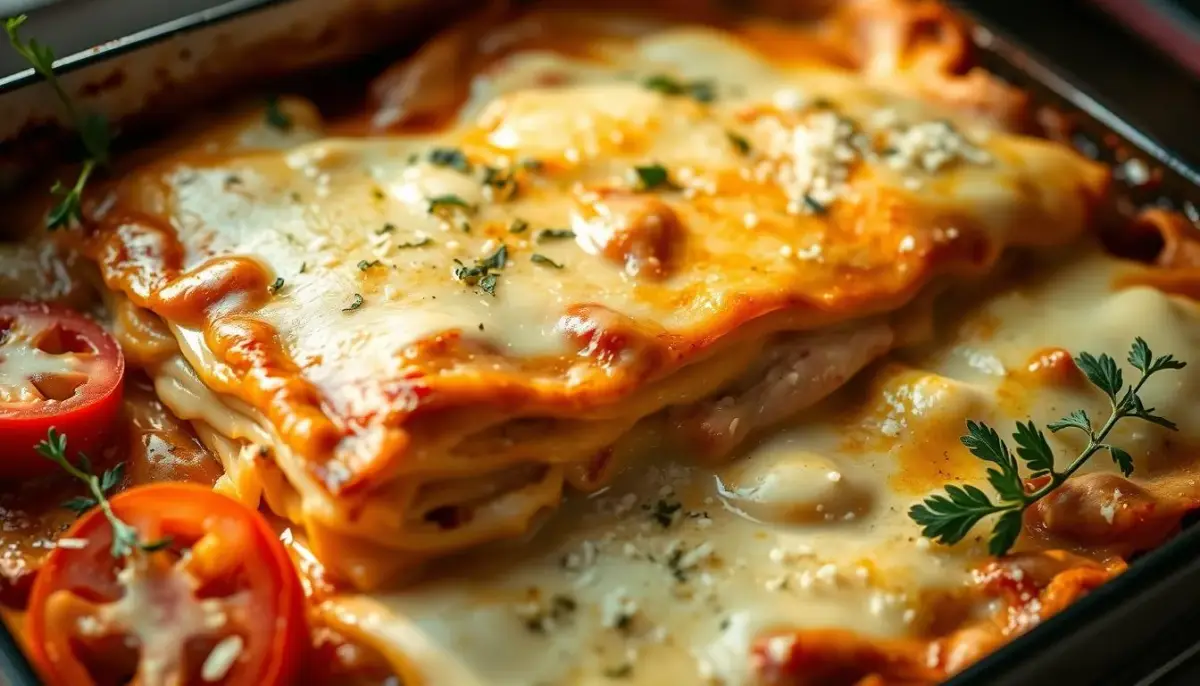
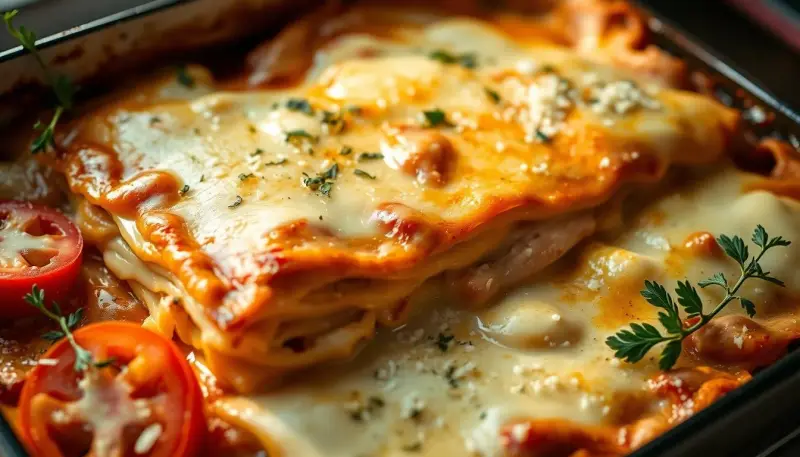
A white lasagna: béchamel enriched with cream and folded with spinach, shredded chicken through the sauce rather than in a separate layer, and ricotta bound with an egg so the slices hold.
- Chicken
- Main Dish
- Baking
Cook’s checkpoint
- Frying oil
- 350°F / 175°C
- Chicken, thickest part
- 165°F / 74°C
Use a food thermometer. Color and time alone don’t confirm poultry is done.
Ingredients
For the cream sauce
For the ricotta layer
To assemble
Instructions
Notes
- No-boil noodles work and skip step 2, but they draw liquid from the sauce. Add 1/2 cup extra milk to the béchamel if you use them.
- Squeezing the spinach genuinely dry is the difference between a set lasagna and a watery one. A clean towel wrung hard removes far more than pressing it in a sieve.
Cooking Mode
Questions
- Can raw chicken go straight into the layers?
- No. The chicken should be fully cooked before it is folded into the sauce. A lasagna reaches temperature slowly and unevenly, which is the wrong environment for cooking poultry from raw.
- Is there a substitute for ricotta?
- Cottage cheese blended smooth is the usual stand-in and behaves similarly once the egg is added. It is wetter, so drain it first.
- How long does the whole thing take?
- About 35 minutes of preparation and 50 to 55 minutes in the oven, plus a 15-minute rest. Using rotisserie chicken removes most of the preparation.
- Why is there no tomato?
- This is a white lasagna by design — the cream sauce, parmesan and nutmeg carry it. Adding tomato does not ruin it, but it competes with the dairy rather than supporting it.