Garlic Butter Baked Scallops
Two words decide whether this works before you buy anything: dry-packed.
Total: 32 minYield: 4 servingsMethod: Baking
In this recipe
What to buy, and what the labels mean
More goes wrong at the fish counter than at the stove with this dish.
- Dry-packed
- Untreated. They look slightly beige and faintly translucent rather than bright white, and they will actually sear. This is the single most important thing on the label.
- Wet-packed
- Soaked in a phosphate solution that makes them absorb and hold water. They look uniformly bright white, weigh more, and release liquid in the pan no matter how well dried. They cannot be seared.
- Sea scallops, not bay
- Sea scallops are roughly 1.5 inches across and can take a sear. Bay scallops are thumbnail-sized and cook through in seconds — a different ingredient for a different dish.
- The side muscle
- A small rectangular tab on the side of each scallop. It is a different texture from the rest and stays chewy. It pulls off with your fingers.
- Frozen is fine
- Often better than the counter, since most 'fresh' scallops were frozen anyway. Thaw them in the refrigerator overnight and dry them thoroughly.
Sear on one side only
Scallops are small and cook fast; searing both sides overcooks the middle before the second crust forms.
- Ten minutes between towelsNot optional and not quick. Change the towels once. This is what makes the next stage possible.
- Pan just smokingHigh heat and a high smoke-point oil. A moderate pan will not form a crust in the time a scallop can tolerate.
- Ninety seconds, undisturbedOne side only. Moving them resets the crust, and there is not enough time to start over.
- Off the heat, butter and crumbThe pan is already hot enough to keep cooking. Adding the garlic butter here rather than earlier stops the garlic burning.
- 400°F for 5-7 minutesGentle, surrounding heat finishes the interior and browns the panko while the seared face stays intact.
Judging doneness on something this small
USDA FSIS publishes one safe minimum internal temperature for seafood: 145°F (63°C). That is the figure this recipe cooks to, and on a scallop it is genuinely measurable — push the probe in from the side, along the width rather than down through the middle.
The visual cue backs it up. A raw scallop is translucent and slightly gray; a cooked one is opaque and white all the way through. If the center still looks glassy when you cut into one, it needs another minute.
Plenty of restaurants serve scallops with a translucent center, pulled somewhere around 125°F to 130°F, and the migrated source for this page used that range. It is softer and many people prefer it. It also sits below the published safe minimum, and those are two separate statements rather than one.
The bigger practical risk is the other direction. Past about 150°F scallop protein tightens sharply and the texture goes from tender to rubbery in under a minute, which is why the oven stage is short and why a thermometer beats a timer here.
Troubleshooting
| Problem | Cause | Fix |
|---|---|---|
| They released water and never seared | Wet-packed scallops, or they were not dried. | Buy dry-packed, and give them ten minutes between paper towels. |
| They are rubbery | Overcooked past about 150°F. | Pull at 145°F. The window between tender and rubbery is roughly a minute. |
| The garlic burned | It went into the hot searing pan. | Cook it separately over medium-low, and add the butter only after the pan comes off the heat. |
| The crumb topping is pale | Panko without enough fat. | It should be sitting in the garlic butter rather than on dry scallops. Spoon the butter over first. |
| One side is gray and soft | They were flipped. | Sear one side only. The oven cooks the other. |
Storage and reheating
Scallops are at their best within minutes of leaving the pan, and this is a dish worth timing rather than storing.
If there are leftovers, refrigerate up to 2 days and reheat to 165°F (74°C), the USDA safe temperature for leftovers, covered at 275°F. That is a second cooking on something with almost no tolerance for it, and they will be firmer — flaking them cold into a salad is genuinely the better option.
Do not freeze cooked scallops. They turn spongy and release water on thawing. Raw scallops freeze well for 3 months and are the sensible thing to keep on hand.
Garlic Butter Baked Scallops
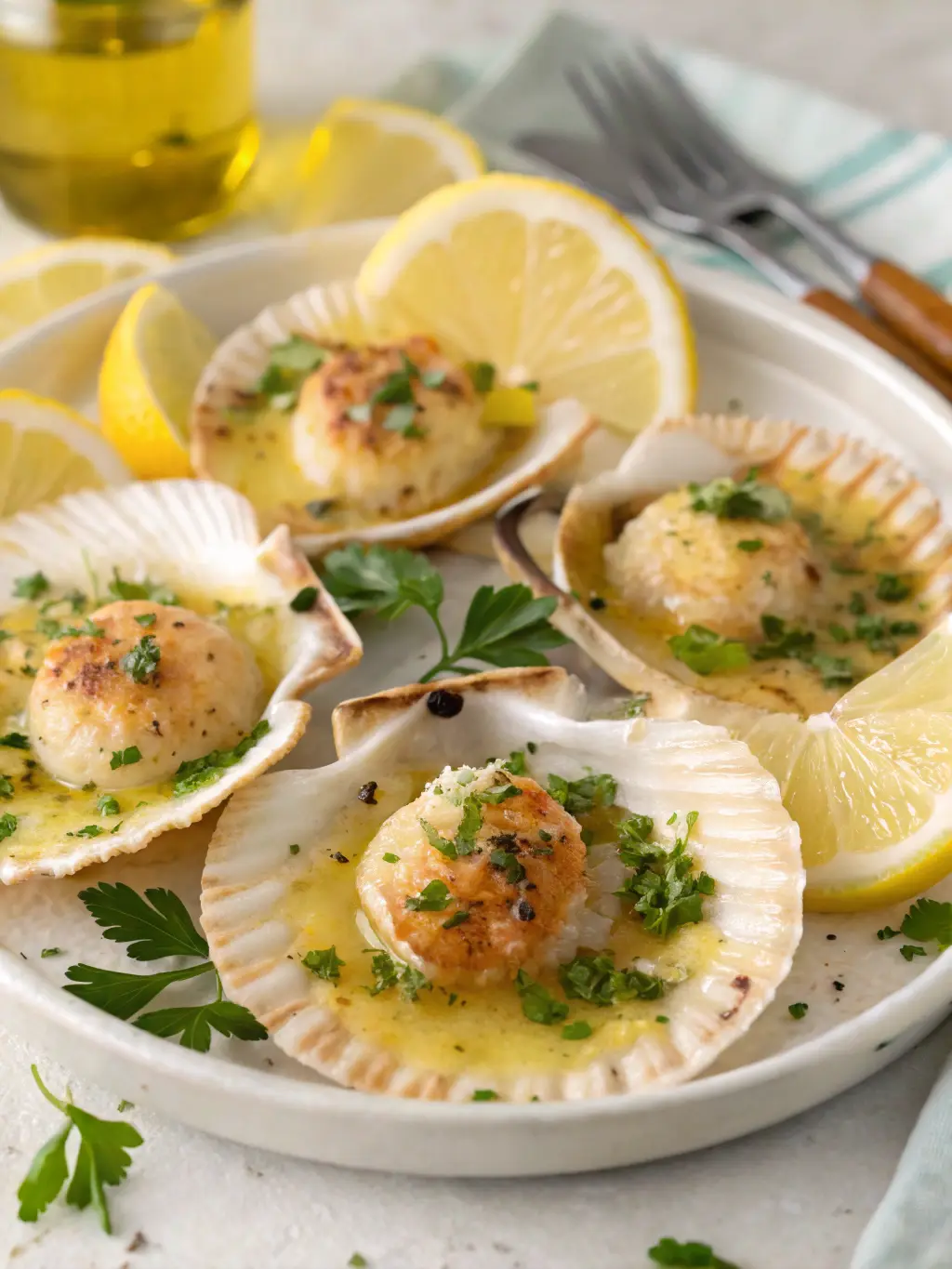
Sea scallops dried hard, seared briefly for color, then finished in the oven under garlic butter and a light crumb. The drying is what makes a sear possible at all.
- Seafood
- Main Dish
- Baking
Cook’s checkpoint
- Frying oil
- 350°F / 175°C
- Chicken, thickest part
- 165°F / 74°C
Use a food thermometer. Color and time alone don’t confirm poultry is done.
Ingredients
For the scallops
For the garlic butter
For the topping
Instructions
Notes
- Many kitchens pull scallops nearer 125°F to 130°F for a softer, translucent center, and the migrated source for this page used that figure. Tasty Recipes states 145°F (63°C) because it is the published USDA FSIS safe minimum for seafood; the lower number is a texture preference, not a safety one, and is stated here so the difference is visible rather than hidden.
- Ask for dry-packed scallops. Wet-packed ones are treated with a phosphate solution that makes them hold water, and no amount of drying will get a sear out of them.
Cooking Mode
Questions
- What is the difference between dry and wet-packed scallops?
- Wet-packed have been soaked in a phosphate solution that makes them retain water. They weigh more, cost less per pound of actual scallop, and cannot be seared because they keep releasing liquid. Dry-packed are untreated.
- Can bay scallops be used?
- Not with this method. They are a fraction of the size and would be overcooked before the sear finished. If you have them, skip the sear and bake for about 8 minutes in the garlic butter.
- Why sear only one side?
- A sea scallop cooks through in a few minutes. Searing both sides means the interior is past done before the second crust develops, and one good crust is better than two mediocre ones.
- What should it be served with?
- Something to catch the garlic butter — crusty bread, plain rice, or angel hair. A sharp green salad balances the richness better than another cooked side.