Korean BBQ Steak Rice Bowls
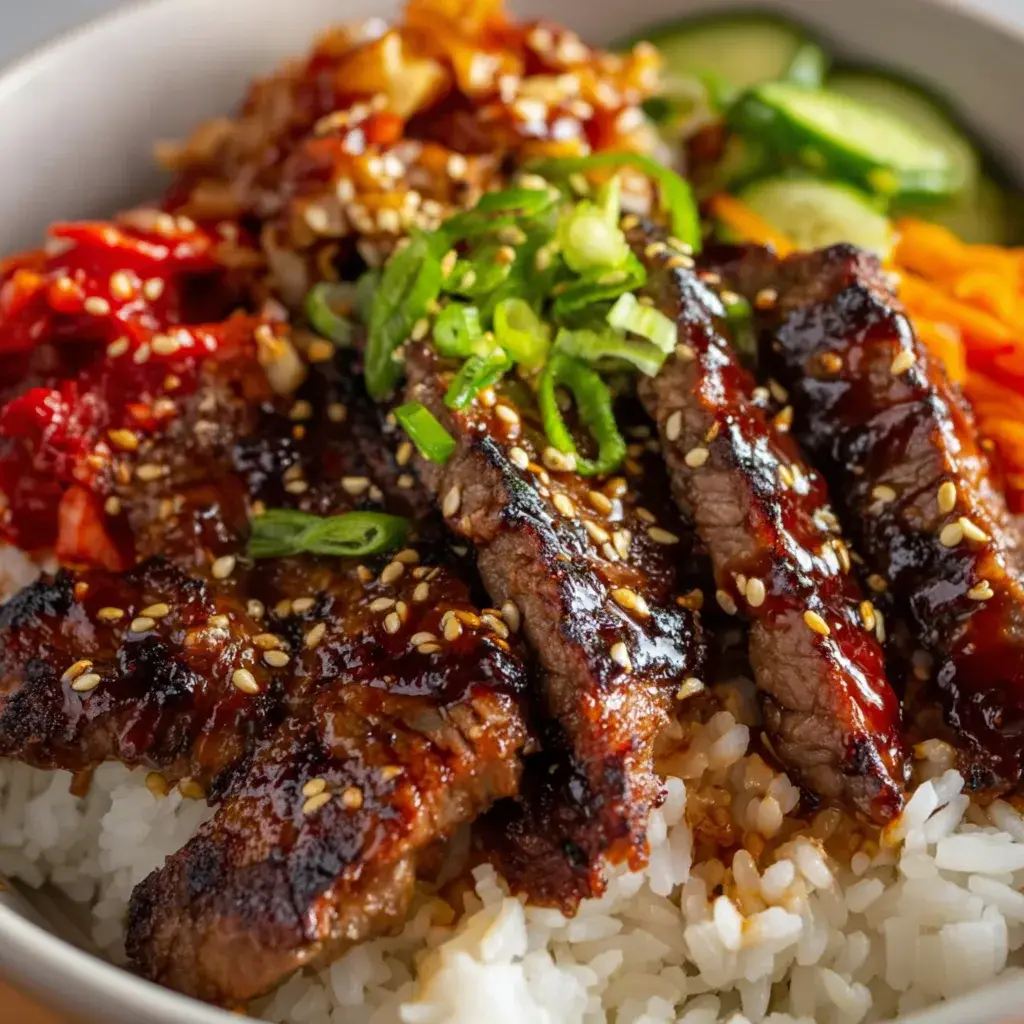
Korean BBQ Steak Rice Bowls are bold, savory, and packed with flavor. Juicy marinated steak is quickly seared and served over fluffy rice with fresh toppings, creating an easy, satisfying bowl that tastes just like your favorite Korean BBQ at home.
Total: 25 minYield: 4 servingsMethod: Skillet
In this recipe
Korean BBQ Steak Rice Bowls bring the bold, savory flavors of Korean cuisine right to your dinner table with minimal fuss. There's something magical about the combination of tender steak strips, gochujang sauce, and perfectly cooked rice that creates a harmonious balance of sweet, spicy, and umami flavors.
Why You'll Love These Korean BBQ Steak Rice Bowls
Perfect Balance of Flavors and Textures
The marinade is where the magic happens in these Korean BBQ Steak Rice Bowls. A blend of soy sauce, brown sugar, sesame oil, garlic, and ginger creates that authentic Korean flavor profile that coats every bite of steak. The caramelization that happens when the marinated beef hits the hot pan is nothing short of miraculous—creating those crispy edges while keeping the inside tender and juicy. The contrast between the warm, savory beef and the cool, crisp vegetables creates a textural symphony that keeps you coming back for another bite.
Quick, Convenient, and Customizable
The steak only needs 30 minutes to marinate (though longer is better!), and the entire dish comes together in under 30 minutes. You can prep components ahead—slice vegetables, cook rice, or even marinate the beef overnight—making dinner assembly lightning fast. These bowls are also endlessly adaptable to what you have on hand. No steak? Try chicken thighs. Need to use up vegetables? Toss them in! The basic formula stays the same, but you can make these bowls uniquely yours with whatever ingredients you're craving or need to use up.
Essential Tips & Tricks
Perfecting the Steak
For truly exceptional Korean BBQ Steak Rice Bowls, the cut and cooking method matter tremendously. Partially freezing the steak for 20-30 minutes makes achieving those thin slices much easier. When cooking, use a screaming hot pan —cast iron is ideal—and work in batches to avoid overcrowding, which causes steaming instead of searing. Let the meat develop that beautiful caramelized crust before flipping, usually just 1-2 minutes per side. This quick cooking preserves the juiciness while creating those charred edges that define Korean BBQ.
Mastering the Rice Base
The foundation of these bowls deserves as much attention as the star protein. For fluffy, perfectly separated grains, rinse your rice until the water runs clear, then let it rest for 15 minutes after cooking. This resting period allows the moisture to distribute evenly throughout the rice. For an extra dimension of flavor, try cooking your rice in low-sodium chicken broth instead of water, or add a sheet of kombu (dried kelp) to the cooking liquid. If you're looking for a more substantial base, try my Parmesan Garlic Rice as a delicious alternative. Remember that warm rice absorbs the beef's flavorful juices better than cold rice, so timing matters!
Serving Ideas & Creative Variations
Delicious Topping Combinations
The beauty of Korean BBQ Steak Rice Bowls lies in the colorful array of toppings that bring freshness, crunch, and visual appeal. A soft-fried egg with a runny yolk adds richness that melds beautifully with the spicy gochujang sauce. For a refreshing element, add quick-pickled vegetables—simply soak thinly sliced veggies in rice vinegar, sugar, and salt for 15 minutes. Fresh herbs like cilantro or mint brighten everything, while sliced avocado contributes creamy richness that balances the bold flavors.
Regional and Dietary Adaptations
These bowls can easily be adapted to accommodate various dietary needs without sacrificing flavor. For a vegetarian version, replace the beef with meaty portobello mushrooms or extra-firm tofu marinated in the same sauce. The key is to get a good sear on your plant-based protein. For a lower-carb option, substitute cauliflower rice or try a blend of quinoa and rice. You can also regionalize the flavors—add crispy fried green beans for texture or incorporate Japanese influences with a drizzle of kewpie mayo and furikake seasoning. For a Thai-inspired twist, add crushed peanuts and a squeeze of lime juice.
Storage & Troubleshooting Guide
Meal Prep and Leftovers
Korean BBQ Steak Rice Bowls make exceptional meal prep options when components are stored properly. Store cooked rice, beef, and vegetables in separate containers in the refrigerator for up to 4 days. This prevents the vegetables from becoming soggy and the rice from absorbing too much moisture. When reheating, add a splash of water to the rice before microwaving to restore moisture, and warm the beef separately at 50% power to prevent overcooking. For the freshest experience, keep raw toppings like sliced cucumbers and herbs separate until serving time. These bowls also freeze well—portion complete meals into airtight containers, leaving off any fresh components, and freeze for up to 2 months.
Common Issues and Solutions
The most frequent challenge with these bowls is tough steak. If this happens, you're likely either slicing with the grain instead of against it, or overcooking the thin slices. Remember that the steak continues cooking slightly after removal from heat. Another common issue is soggy vegetables—solve this by blanching vegetables like broccoli or green beans just until bright green, then shocking in ice water to stop the cooking process. If your sauce is too thin, mix 1 teaspoon cornstarch with 1 tablespoon water and add to the simmering sauce. For too-spicy sauce, balance with a touch more brown sugar or a dollop of sour cream served on top.
Frequently Asked Questions
What is gochujang and can I substitute it in Korean BBQ Steak Rice Bowls?
Gochujang is a fermented Korean chili paste with sweet, spicy, and umami flavors. You can substitute with a mixture of miso paste and sriracha, though the flavor profile will be slightly different.
Can I make these bowls ahead of time?
Yes! Marinate the beef and prep vegetables up to 24 hours ahead. Cook components separately and assemble just before serving for the best texture and flavor.
What's the best cut of beef for Korean BBQ?
Ribeye or sirloin offer the best balance of tenderness and flavor. Flank steak works well too if sliced thinly against the grain and cooked quickly.
How spicy are Korean BBQ Steak Rice Bowls typically?
The spice level is customizable. Start with less gochujang and add more to taste. Korean cuisine typically balances heat with sweet and savory elements.
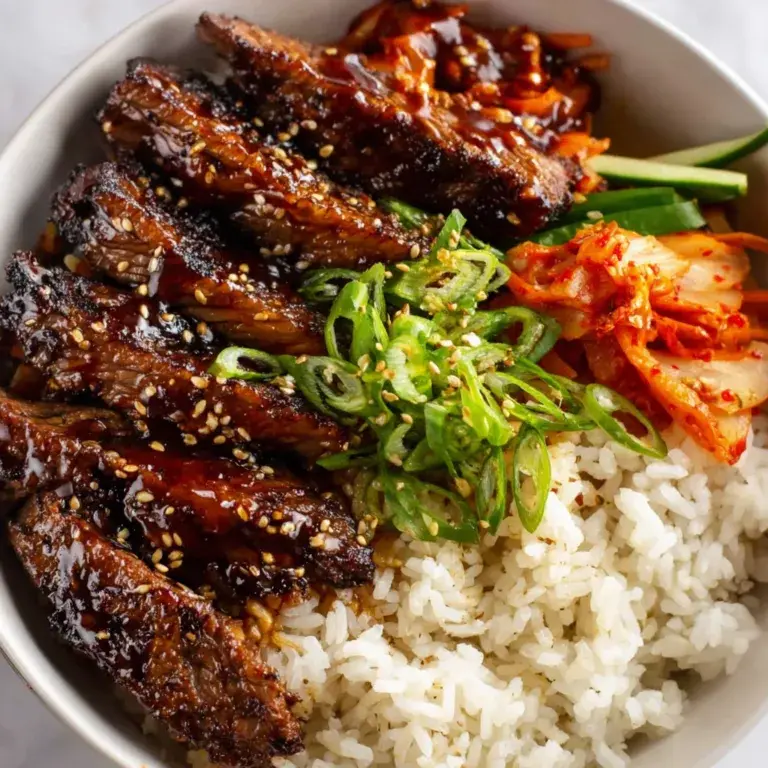
Korean BBQ Steak Rice Bowls
Korean BBQ Steak Rice Bowls are bold, savory, and packed with flavor. Juicy marinated steak is quickly seared and served over fluffy rice with fresh toppings, creating an easy, satisfying bowl that tastes just like your favorite Korean BBQ at home.
- Beef
- Main Dish
- Skillet
Cook’s checkpoint
- Frying oil
- 350°F / 175°C
- Chicken, thickest part
- 165°F / 74°C
Use a food thermometer. Color and time alone don’t confirm poultry is done.
Ingredients
For the marinade
For the bowls
Optional garnish
Instructions
Notes
- Slice steak against the grain for tenderness.
- Adjust sweetness by adding more or less brown sugar.
- Great for meal prep—store components separately.