Mexican Chicken Soup
The broth is built, not bought — and the garnishes at the end are doing as much work as anything in the pot.
Total: 1 hrYield: 6 servingsMethod: Stovetop
In this recipe
Poaching the chicken is the first recipe
Carton broth plus cooked chicken makes a soup that tastes thin no matter how much is added to it. Poaching bone-in thighs in that broth turns it into something else: collagen from the bones and skin dissolves into gelatin, which gives the liquid weight on the tongue.
The rule for the poach is that it must never boil. At a bare simmer — occasional bubbles breaking, not a rolling surface — the fat stays separate enough to skim and the broth stays clear. Boiled, the fat emulsifies into the liquid and it turns cloudy and slightly greasy, and the meat tightens at the same time.
Twenty-five minutes is enough. The thighs come out at temperature, the broth has taken what it needs, and shredding the meat off the bone takes another five. Everything after that is built on top of a broth that already tastes of chicken.
The order things go in
Each vegetable enters at the point it can survive, so nothing is collapsed by the time the pot is served.
- Poach and shredTwenty-five minutes at a bare simmer. Meat out, broth strained and reserved.
- Aromatics and spices in fatOnion and jalapeno, then dry spices for forty-five seconds, then tomato paste for two minutes. Under a minute of work that decides how the soup tastes.
- Broth, tomatoes, carrotsTen minutes. Carrot is the densest vegetable here and needs the longest.
- Zucchini and cornSix to eight minutes. Zucchini turns to mush quickly and corn only needs heating.
- Chicken back, two minutesIt is already cooked. Any longer and the shreds go stringy in the broth.
What goes on the table
The soup is deliberately under-finished in the pot. Five things complete it in the bowl.
- Lime wedges — the acid the pot has none of, and the single most important one.
- Diced avocado, for fat and a soft texture against the broth.
- Cilantro, added raw so it stays aromatic rather than cooking away.
- Crumbled queso fresco, for salt and a mild dairy note that does not melt in.
- Tortilla strips, added per bowl at the last second so they keep their crunch.
Troubleshooting
| Problem | Cause | Fix |
|---|---|---|
| The broth is cloudy and greasy | It boiled during the poach. | A bare simmer only. Once emulsified, the fat cannot be separated out again. |
| It tastes flat | No acid. | Lime at the table, not in the pot. It is the element the whole bowl is balanced around. |
| The zucchini disintegrated | Added with the carrots. | Last six to eight minutes. It cooks far faster than root vegetables. |
| The spices taste dusty | They went into liquid instead of hot fat. | Forty-five seconds in the oil with the aromatics, before any broth arrives. |
| The tortilla strips went soggy | They were added to the pot. | Per bowl, at the table. There is no version of this where they survive in the soup. |
Storage and reheating
Refrigerate the soup up to 4 days, garnishes separate. The broth sets to a soft jelly when cold, which is a sign the poaching worked rather than a fault — it liquefies as soon as it warms.
Reheat to 165°F (74°C), the USDA safe temperature for leftovers, over medium-low. Avocado, cilantro and tortilla strips all need to be fresh; only the soup itself reheats.
It freezes for 3 months, though the zucchini softens considerably. If you plan to freeze it, leave the zucchini out and add it fresh when reheating.
Mexican Chicken Soup
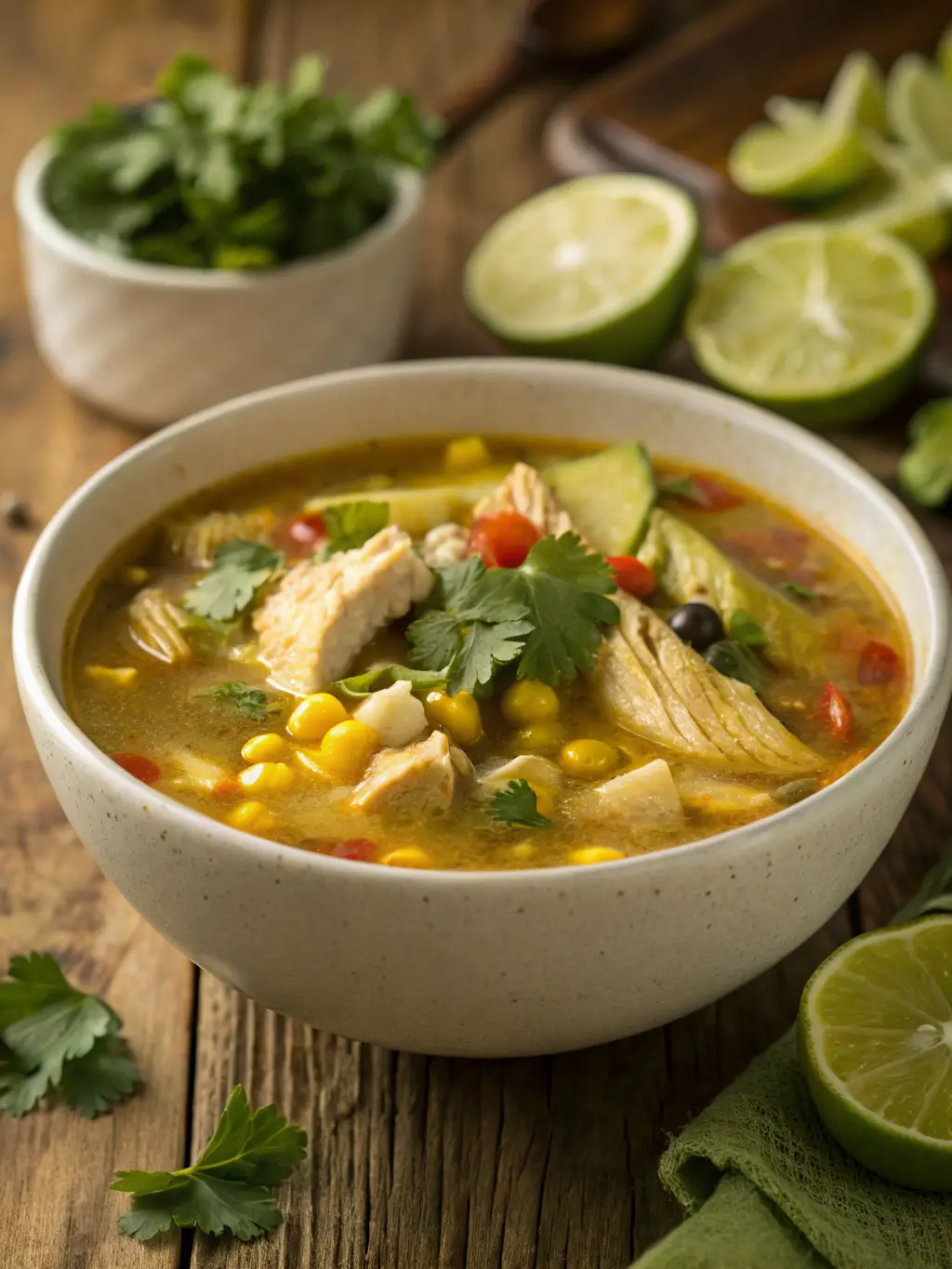
Chicken poached in its own broth with tomato, corn and chiles, shredded back in, and finished at the table with lime, avocado and cilantro. The garnishes are structural, not decorative.
- Chicken
- Main Dish
- Stovetop
Cook’s checkpoint
- Frying oil
- 350°F / 175°C
- Chicken, thickest part
- 165°F / 74°C
Use a food thermometer. Color and time alone don’t confirm poultry is done.
Ingredients
For the broth
For the base
For the pot
To serve
Instructions
Notes
- Bone-in, skin-on thighs are what make the broth. Boneless meat cooks faster but contributes almost no body, and the soup ends up tasting like the carton it came from.
- Add the tortilla strips at the table, never to the pot. In the soup they dissolve into paste within a couple of minutes.
Cooking Mode
Questions
- Is this the same as chicken tortilla soup?
- Closely related. Tortilla soup usually leans harder on dried chiles and is often blended smoother; this is a brothier, chunkier soup in the caldo tradition with the tortilla as a garnish rather than a base.
- How spicy is it?
- Mild. One seeded jalapeno across six servings gives warmth rather than heat, and the chili powder is a mild blend. Leave the seeds in, or add a serrano, if you want it hotter.
- Can rotisserie chicken be used?
- It saves time but costs the broth its body, since the poaching is what builds it. If you use it, simmer the carcass in the broth for 25 minutes first and you get most of the benefit back.
- What can replace queso fresco?
- Cotija is saltier and drier and works well. Feta is the closest supermarket substitute in texture, though it is sharper. Avoid anything that melts — the point is a crumble that stays distinct.