Nashville Hot Chicken Sandwiches
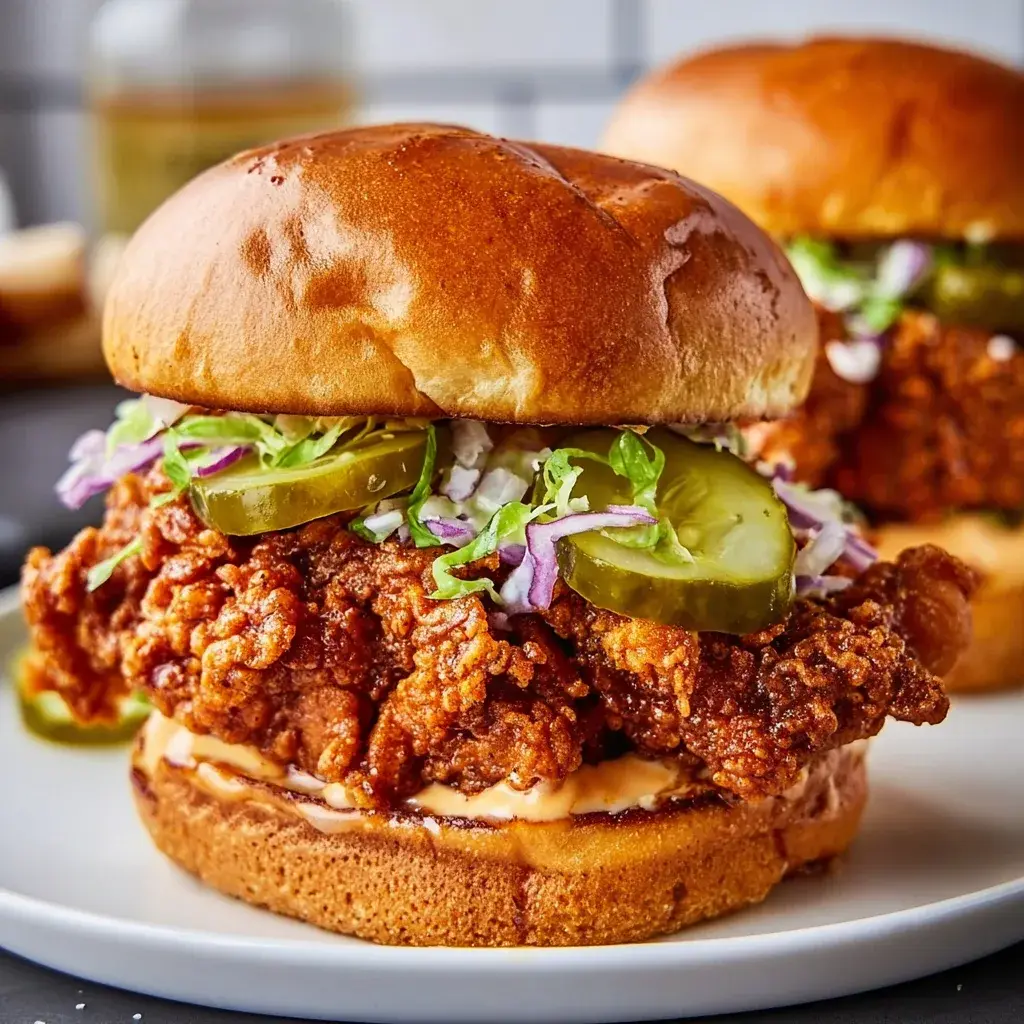
Buttermilk-brined thighs, a flour-and-cornstarch crust, and a cayenne oil brushed on after frying — the step that makes hot chicken hot chicken rather than fried chicken with sauce.
Total: 2 hr 50 minYield: 4 sandwichesMethod: Frying
In this recipe
What makes it different, and why this version works
Nashville hot chicken is defined by when the heat arrives, not just how much of it there is. Buffalo-style chicken is tossed in a sauce. Here the chicken is fried first, then brushed with a cayenne-heavy oil, so the spice sits on the crust as a coating rather than soaking into it. That is what produces the deep red surface and a heat that builds over several bites instead of arriving all at once.
The oil for that step is the frying oil itself, already carrying flavor from the chicken. Whisking cayenne, brown sugar, smoked paprika and garlic powder into it while it is still hot blooms the spices, which is why the finish tastes rounded rather than sharp.
- 01Thighs, not breastsBoneless skinless thighs carry more fat than breast meat and stay juicier through the high heat of frying. This is the single change that most affects the result.
- 02A buttermilk brine that does two jobsThe lactic acid in buttermilk tenderizes the meat while keeping it moist during frying, and the hot sauce whisked into the brine seasons the chicken from the inside rather than only at the crust.
- 03Cornstarch in the dredgeThe coating is one and a half cups of flour cut with half a cup of cornstarch. Cornstarch is a standard partner to flour in a fried coating, where it is used for a lighter, crisper crust that holds up once the oil goes on.
Before you start
Total time is two hours fifty minutes, but most of that is the brine sitting in the fridge. Active work is about fifty minutes.
- Start the brine at least two hours ahead, or the night before.
- You need a thermometer, for two things: holding the oil at 350°F (175°C), and checking the chicken reaches 165°F (74°C) inside.
- Set up a wire rack over a baking sheet before you fry — it is where the chicken drains and later where it reheats.
- Have the buns, pickles and slaw ready. These sandwiches are assembled and eaten immediately.
Ingredient guidance
What each part is doing, and where a substitution changes the outcome.
- Chicken thighs
- Two pounds, boneless and skinless, cut so the pieces fit a bun.
- Buttermilk and hot sauce
- Two cups of buttermilk with a tablespoon of hot sauce. The buttermilk is the tenderizer; the hot sauce is background seasoning, not the heat source.
- Flour and cornstarch
- One and a half cups flour to half a cup cornstarch, seasoned with paprika, garlic powder, onion powder, salt and black pepper. Season the dredge, not just the brine.
- Cayenne
- Two tablespoons as written. There is hot sauce in the brine too, but most of the finished heat comes from the cayenne in the hot oil, so this is the main control. Scale it to your own tolerance rather than to a number.
- Brown sugar and smoked paprika
- A tablespoon of brown sugar and half a teaspoon of smoked paprika give the oil something besides heat. Neither is enough to make the sandwich sweet.
- Brioche buns
- Buttery and slightly sweet, which is why they suit this sandwich. Potato rolls or Texas toast also work. Avoid crusty breads — a hard crust fights an already-intense filling.
- Dill pickles
- Not a garnish. The acidity is what keeps the richness and heat from flattening out over a whole sandwich.
The process in five stages
The full quantities and step order are in the recipe card below. This is the shape of the cook, so you know what is coming.
- BrineChicken into buttermilk and hot sauce for at least two hours, or overnight. This is unattended time.
- Heat the oilBring the frying oil to 350°F (175°C) in a deep skillet and keep it there.
- DredgeCombine the flour, cornstarch and seasonings, then coat each piece fully. Full coverage matters more than a thick coat.
- FrySix to eight minutes per side. Color alone does not tell you chicken is done: the USDA safe minimum for poultry is 165°F (74°C), measured in the thickest part with a food thermometer. Drain on the wire rack, not on paper.
- Hot oil and assembleWhisk the cayenne, brown sugar, smoked paprika and garlic powder into hot frying oil, brush it over the chicken while both are still warm, toast the buns, and build.
Critical tips
- Brush while both are warmThe oil should be hot enough to bloom the spices but not smoking, and the chicken should still be warm when it is brushed. Cold chicken does not take the coating evenly.
- Judge the heat lowThe heat can feel stronger after the spiced oil settles on the chicken, so begin cautiously and add more only when needed. Aim slightly under where you want to end up.
- Fry in batches and let the oil recoverCrowding the pan drops the oil temperature, and the crust sets slowly and greasily when it does. Wait for 350°F to come back before the next batch goes in.
Troubleshooting
| Problem | Cause | Fix |
|---|---|---|
| The crust goes soft after brushing | The hot oil was applied too heavily, or the chicken drained on paper instead of a rack. | Brush rather than pour, and rest the chicken on a wire rack so air reaches underneath. |
| The chicken is dark outside but underdone inside | The oil ran above 350°F, so the crust set before the center cooked. | Bring the oil back to temperature between batches and hold it at 350°F (175°C). |
| The spice tastes raw and dusty | The cayenne mix never bloomed, because the oil had cooled too far. | Whisk the spices into oil taken straight from the pan while it is still hot. |
| It is far hotter than expected | The heat can read stronger once the oil settles, and cayenne is the main variable controlling it. | Use less cayenne next time and serve with extra pickles, which cut the heat directly. |
| Reheated chicken is soggy | It was reheated in the microwave, which steams the crust. | Reheat on a wire rack over a baking sheet at 375°F for 10 to 15 minutes instead. |
Serving and variations
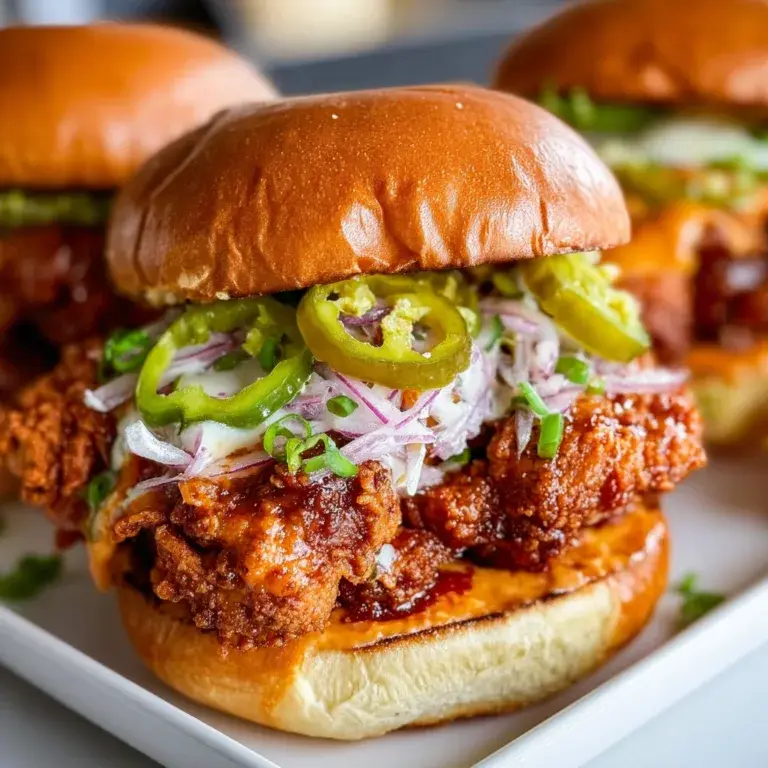
Build on a toasted brioche bun: a thin layer of mayonnaise on both cut faces, the hot chicken, cold slaw, then two or three pickle slices. Toasting matters here — an untoasted cut face goes soft under hot chicken and a brushed oil finish within a few minutes.
Serve immediately. This is not a sandwich that holds; the crust is at its best in the first few minutes after the oil goes on.
A tablespoon of honey whisked into the spice oil gives a sweet-heat finish and takes a little of the edge off without changing the method.
For a Memphis-leaning version, add a thin layer of barbecue sauce. For a Southwestern one, top with avocado and a corn relish. Potato rolls or Texas toast stand in for brioche.
Storage, reheating and making ahead
Store the chicken separately from the buns and toppings. Let it cool completely, then refrigerate in an airtight container for up to three days.
Reheat to 165°F (74°C) throughout, which is the USDA safe target for leftovers. For texture, do it on a wire rack set over a baking sheet at 375°F for 10 to 15 minutes so the crust crisps again. Skip the microwave; it steams the coating soft.
To work ahead, prepare the components separately — fry the chicken, make the slaw, mix the spice oil — and assemble only at serving time. If you expect leftovers, brush the hot oil only onto the pieces you are eating now.
Nashville Hot Chicken Sandwiches
Chicken thighs brine in buttermilk, take a flour-and-cornstarch coating, and fry until crisp. A cayenne oil goes on after frying, not before. Served on toasted brioche buns with dill pickles and optional slaw.
- Chicken
- Main Dish
- Frying
Cook’s checkpoint
- Frying oil
- 350°F / 175°C
- Chicken, thickest part
- 165°F / 74°C
Use a food thermometer. Color and time alone don’t confirm poultry is done.
Ingredients
For the chicken
For frying
For the Nashville hot oil
For the sandwiches
Instructions
Notes
- Start mild with cayenne and build heat.
- Chicken thighs stay juicier than breasts.
- Serve with extra pickles to cool the heat.
Cooking Mode
Questions
- Can I use chicken breasts instead of thighs?
- Yes, but thighs stay juicier. Breast meat is leaner and dries out faster at frying temperature, so check it earlier than the six-to-eight minutes per side the recipe gives.
- How do I control how hot it is?
- The recipe uses two tablespoons of cayenne. There is also hot sauce in the buttermilk brine, but cayenne in the hot oil is the main control for the final heat level. Heat tolerance varies a lot, so start with less if you are unsure. Whisk the oil, let a drop cool on a spoon and taste that carefully before brushing any of it on, then add more cayenne only if you want it hotter. Never taste oil straight from the pan.
- Is this recipe gluten-free?
- No. As written it uses all-purpose flour in the dredge and standard brioche buns, both of which contain gluten. We have not tested or verified a gluten-free version of this recipe, so we are not going to tell you one works.
- Can I bake the chicken instead of frying it?
- Not with this recipe — it is written for frying, and the timings and crust depend on it. If you want a baked spicy chicken instead, use a recipe built for the oven: Baked Crunchy Hot Honey Chicken.