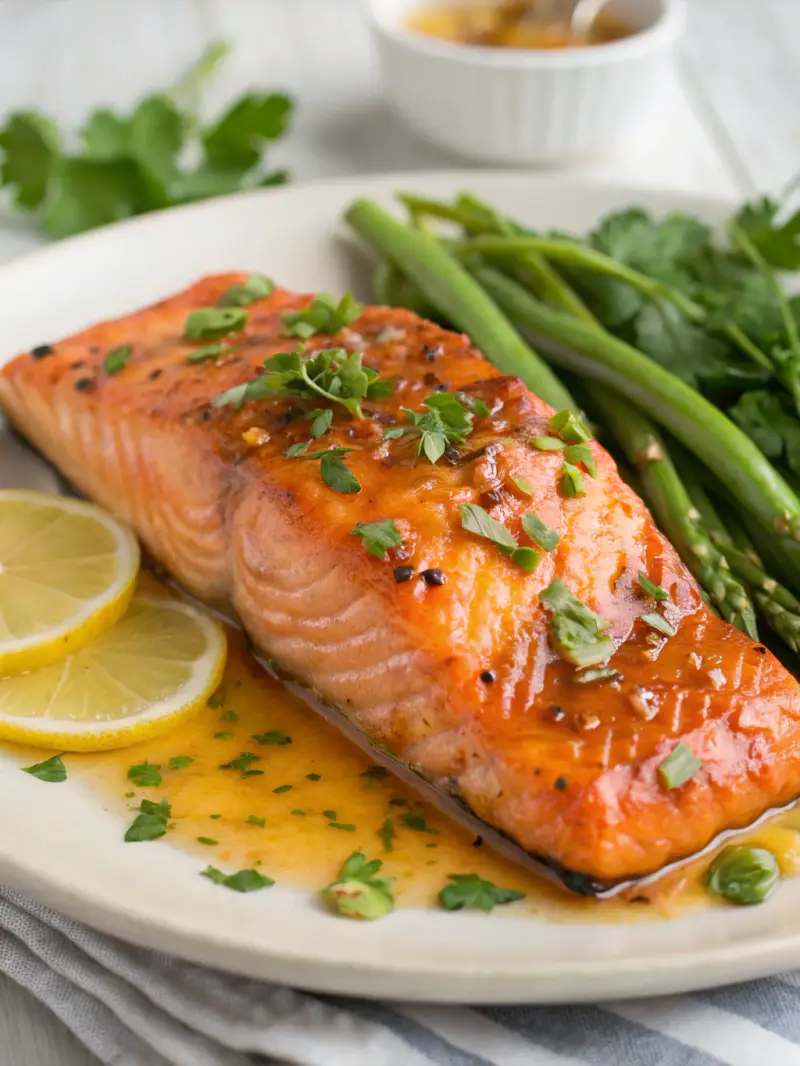
Salmon with Ginger Glaze Recipe
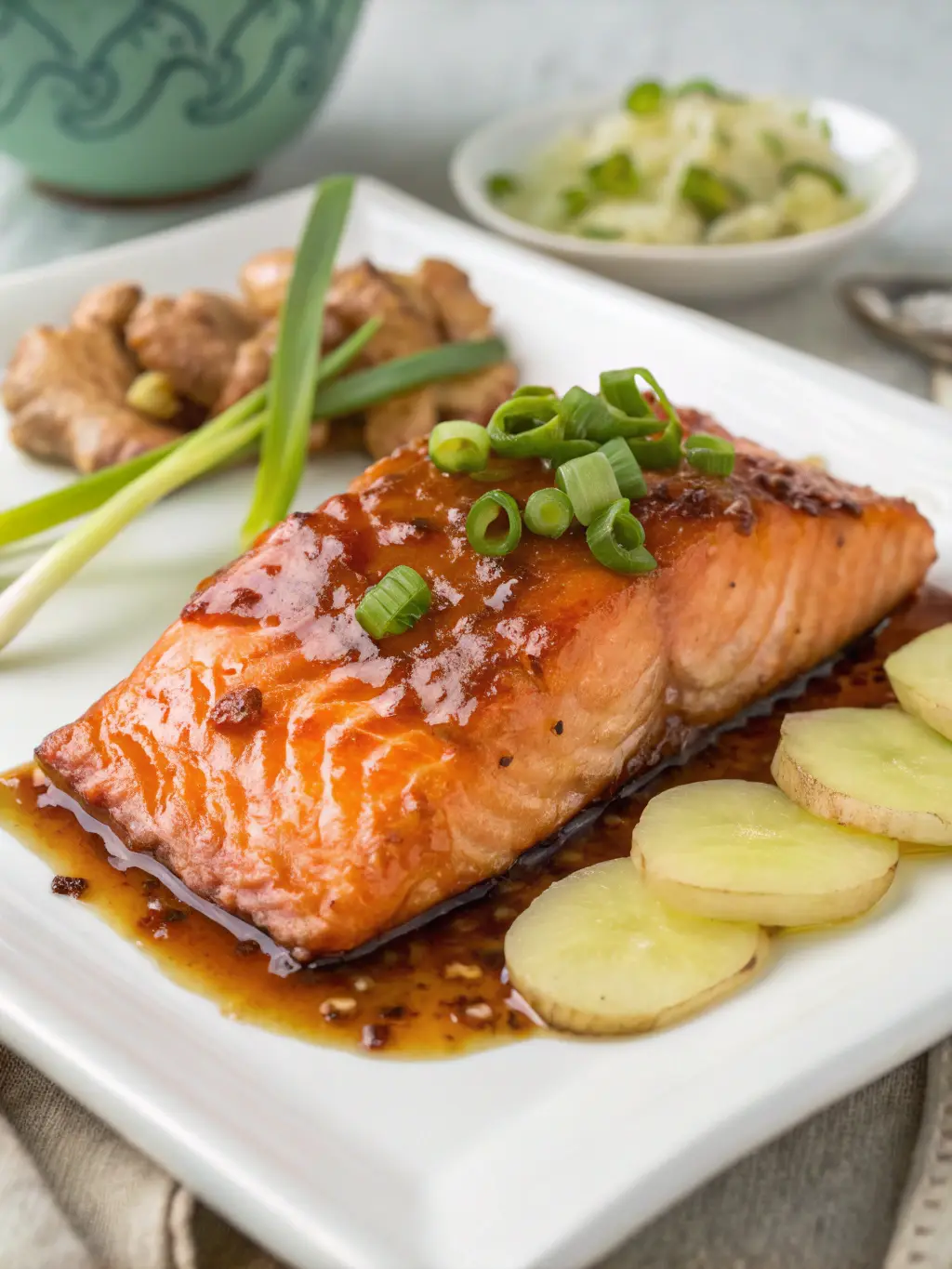
Delicious salmon fillets glazed with a flavorful ginger sauce, perfect for a healthy and easy-to-make meal.
In this recipe
Introduction
The truth might surprise you. Salmon with a Ginger Glaze transforms an ordinary weeknight dinner into a culinary masterpiece with minimal effort. This delectable dish combines the rich, omega-3 packed salmon with a sweet-savory Asian-inspired glaze that caramelizes perfectly during cooking. Whether you're a novice in the kitchen or a seasoned chef, this recipe promises to deliver exceptional flavor while being surprisingly simple to execute.
For the Salmon
For the Ginger Glaze
Timing
- Preparation Time: 10 minutes (includes making the glaze and preparing the salmon)
- Total Time: 25 minutes (compared to the average weeknight dinner prep of 52 minutes)
- Resting Time: 3 minutes (essential for retaining juices)
Step 1: Prepare the Ginger Glaze
Combine soy sauce, honey, grated ginger, minced garlic, lime juice, sesame oil, and red pepper flakes (if using) in a small bowl. Whisk thoroughly until the honey is fully incorporated and the mixture looks uniform. Set aside 2 tablespoons of the glaze in a separate container for serving—this prevents cross-contamination and gives you extra sauce for drizzling at the end.
Pro Tip: For maximum flavor infusion, prepare the glaze up to 24 hours ahead and refrigerate. The extra time allows the ginger and garlic to fully release their aromatic compounds, resulting in a more complex flavor profile.
Step 2: Prepare the Salmon
Pat the salmon fillets dry with paper towels—this is critical for achieving that perfect sear. Season both sides generously with salt and freshly ground black pepper. For those who meal prep, you can complete this step up to 8 hours ahead, leaving the seasoned fillets covered in the refrigerator.
Pro Tip: Allow salmon to come to room temperature for about 15 minutes before cooking for more even heat distribution and better texture.
Step 3: Sear the Salmon
Heat olive oil in a large non-stick skillet over medium-high heat until shimmering but not smoking. Place the salmon fillets skin-side down in the hot pan. This technique creates that coveted crispy skin that adds wonderful texture contrast to your dish.
Cook undisturbed for 4-5 minutes until the skin is golden and crispy. The skin serves as a natural protective barrier, ensuring your salmon stays moist while cooking.
Pro Tip: Use a fish spatula to gently press each fillet for the first 10 seconds of cooking to prevent the edges from curling up, ensuring even contact with the pan.
Step 4: Glaze and Finish Cooking
Carefully flip the salmon and reduce heat to medium. Immediately brush the glazing mixture over the top and sides of each fillet. Continue cooking for 3-4 minutes for medium doneness, or until the internal temperature reaches 125°F (52°C) for medium-rare or 130°F (54°C) for medium.
Pro Tip: The USDA recommends cooking salmon to 145°F, but many chefs prefer the moister texture of salmon at 125-130°F. Use your discretion based on personal preference and the quality of your fish.
Step 5: Rest and Serve
Transfer the salmon to a plate and let rest for 3 minutes, allowing the residual heat to finish cooking the fish while the proteins relax and reabsorb their juices. Drizzle with the reserved glaze, then garnish with chopped parsley and sliced green onions.
Pro Tip: For a beautiful presentation, serve over a bed of steamed jasmine rice and accompany with lime wedges on the side. The acidity cuts through the richness of the salmon perfectly.
Healthier Alternatives for the Recipe
Transform this already nutritious dish into an even healthier option with these smart modifications
- Lower Sugar Version: Replace honey with monk fruit sweetener or half the amount of honey plus stevia for a 50% reduction in carbohydrates.
- Reduced Sodium Option: Cut soy sauce in half and complement with extra lime juice and a dash of fish sauce for umami depth, reducing sodium by approximately 30%.
- AIP-Friendly: Omit red pepper flakes and garlic, substitute ginger powder for fresh ginger if sensitivity exists, and use maple syrup instead of honey.
Serving Suggestions
Elevate your Salmon with a Ginger Glaze with these complementary sides
- Serve over fragrant coconut rice or cauliflower rice (for a low-carb option)
- Pair with roasted baby bok choy or steamed broccoli tossed with a light sesame dressing
- Accompany with a cucumber-avocado salad dressed with rice vinegar and sesame oil
- Create a build-your-own bowl with edamame, pickled red cabbage, and a sprinkle of furikake
- For a complete meal prep option, portion with quinoa and roasted sweet potatoes for a balanced lunch that reheats beautifully
Perfect Pairing: A chilled glass of Riesling or Gewürztraminer complements the ginger glaze wonderfully, while green tea makes an excellent non-alcoholic alternative.
Common Mistakes to Avoid
Based on data from cooking forums and recipe reviews, here are the pitfalls to watch for
- Remember that residual cooking continues after removing from heat.
- Not Patting Salmon Dry: Skipping this step leads to steaming rather than searing and prevents proper caramelization of the glaze.
- Adding Cold Salmon to the Pan: This causes uneven cooking and potential sticking. Let it rest at room temperature briefly before cooking.
- Overcrowding the Pan: Cook in batches if necessary to maintain proper heat distribution and allow steam to escape.
- Stirring or Moving the Salmon Too Early: Allow the proper sear time before flipping to develop that crispy skin and prevent sticking.
- Using Dull Knives When Cutting Ingredients: Particularly with ginger, a sharp knife makes precise mincing possible, releasing more flavor.
Storing Tips for the Recipe
Maximize freshness and convenience with these storage strategies
- Leftover Cooked Salmon: Refrigerate in an airtight container for up to 3 days. For best texture, reheat gently at 275°F in the oven until just warmed through (about 15 minutes).
- Make-Ahead Glaze: The ginger glaze can be prepared up to 5 days ahead and stored in an airtight container in the refrigerator.
- Freezing Option: While not ideal, cooked salmon can be frozen for up to 1 month. Thaw overnight in the refrigerator and reheat covered in a 275°F oven with a splash of water to maintain moisture.
- Meal Prep Strategy: Portion cooled salmon with sides into microwave-safe glass containers for grab-and-go lunches. Reheat at 70% power to prevent tough, rubbery texture.
Conclusion
The Salmon with a Ginger Glaze recipe proves that healthy, impressive meals don't require hours in the kitchen or culinary school credentials. With its perfect balance of sweet and savory flavors, nutrient density, and straightforward preparation, this dish deserves a permanent spot in your dinner rotation. The versatility allows for endless variations to suit dietary preferences, while the quick cooking time makes it accessible even on the busiest weeknights. Ready to elevate your home cooking with minimal effort? Give this recipe a try tonight and discover why salmon with an Asian-inspired twist is becoming a favorite among health-conscious food enthusiasts everywhere.
FAQs
Yes! Thaw frozen salmon completely in the refrigerator overnight. Pat very dry with paper towels before cooking, as frozen salmon often releases more moisture.
How do I know when the salmon is perfectly cooked? The salmon should flake easily with a fork but still maintain a slightly translucent center. For precision, use an instant-read thermometer and aim for 125-130°F for medium doneness.
Can I bake this salmon instead of pan-searing? Absolutely! Preheat your oven to 400°F, place the salmon on a lined baking sheet, brush with half the glaze, and bake for 10-12 minutes. Brush with remaining glaze before serving.
Is this recipe suitable for meal prep? Yes, though salmon is best enjoyed freshly cooked. For meal prep, slightly undercook the salmon, then portion with sides. Reheat gently to prevent overcooking.
Can I double the glaze recipe to use as a sauce for side dishes? Definitely! Double the glaze ingredients and set half aside before adding any to the salmon. The reserved glaze makes an excellent sauce for vegetables or rice.
What's the best type of salmon to use for this recipe? Wild-caught sockeye or king salmon offer the richest flavor and firmest texture, but any salmon variety works well with this versatile glaze.
Salmon with Ginger Glaze Recipe
Delicious salmon fillets glazed with a flavorful ginger sauce, perfect for a healthy and easy-to-make meal.
- Seafood
Cook’s checkpoint
- Frying oil
- 350°F / 175°C
- Chicken, thickest part
- 165°F / 74°C
Use a food thermometer. Color and time alone don’t confirm poultry is done.
Ingredients
Instructions
Nutrition Information
Per serving, as published with the original recipe.
- Calories
- 320 per serving
- Protein
- 34g (68% of daily recommended intake)
- Fat
- 16g
- Carbohydrates
- 8g
- Fiber
- <1g
- Sugar
- 7g (primarily from honey)
- Sodium
- 425mg (18% of daily recommended intake)
- Potassium
- 780mg (22% of daily recommended intake)