Sweet and Sour Meatballs
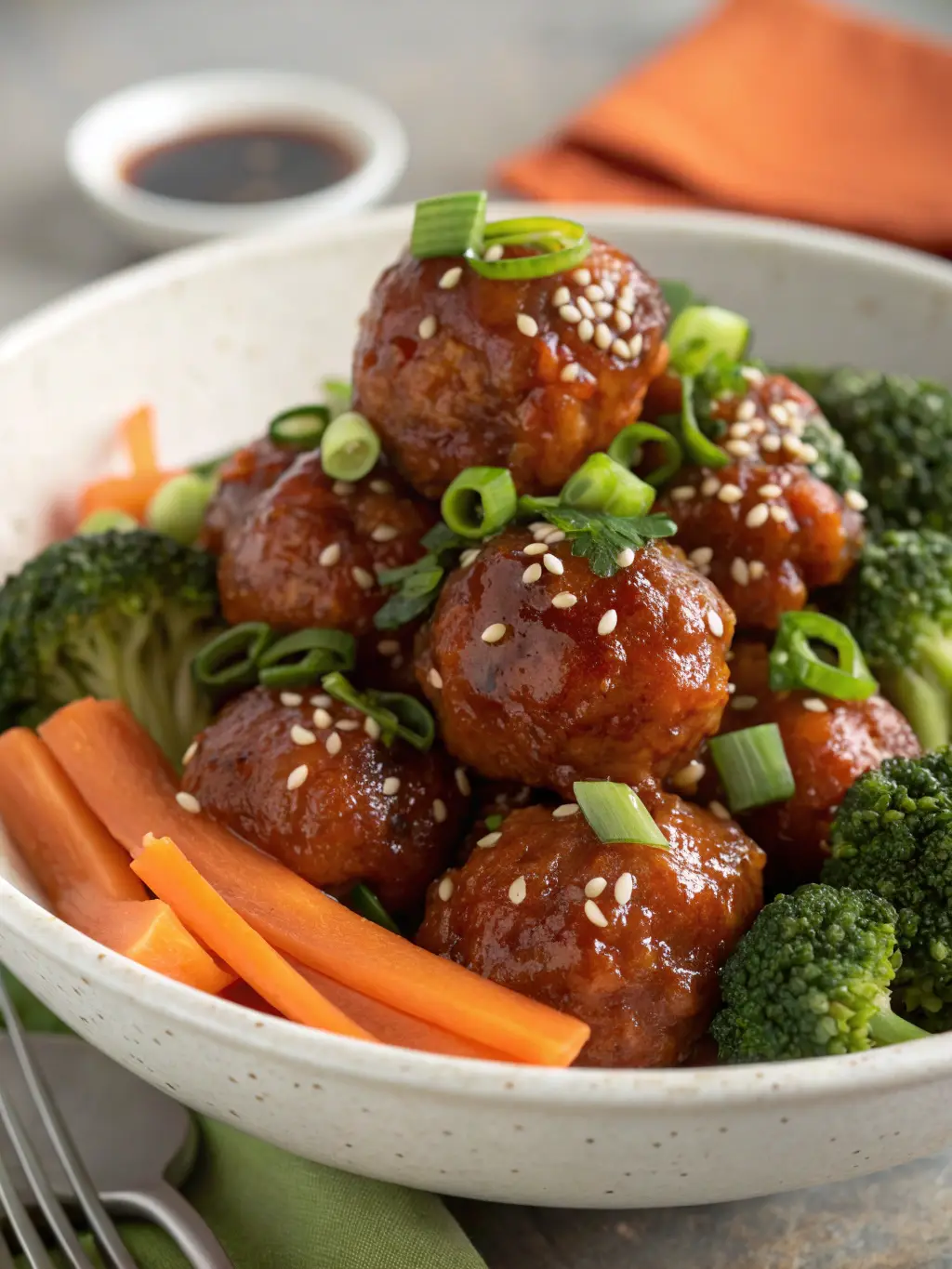
Sweet and sour is a ratio before it is a flavor. Get the ratio right and the sauce needs almost no adjusting.
Total: 1 hrYield: 6 servingsMethod: Baking
In this recipe
The four things in the sauce
Roughly equal sweet and sour, with salt and tomato underneath. Change one and the others need moving.
- Brown sugar, 1/3 cup
- The sweet side. Brown rather than white for a faint molasses note that stands up to the vinegar; white sugar makes the sauce taste flatter.
- Rice vinegar, 1/3 cup
- The sour side, matched to the sugar. Rice vinegar is milder than white or cider vinegar — swapping it in at the same volume makes the sauce noticeably sharp.
- Pineapple juice, 1 cup
- Sweet and acidic at once, which is why it sits in both columns. Using the juice from the can rather than water is what ties the fruit to the sauce.
- Soy sauce, 2 tbsp
- The salt. Without it the sauce reads as dessert — this is the ingredient most often cut and most often missed.
- Ketchup, 3 tbsp
- Color and a little body. It is a small quantity doing a cosmetic job as much as a flavor one.
Getting the cornstarch to behave
Cornstarch has one rule that governs everything else: it does not thicken until it has actually simmered. A sauce that has been stirred and taken off the heat immediately will look thin, sit thin, and then thicken unpredictably on the plate.
The visual cue is clarity. A cornstarch sauce goes from cloudy and matte to clear and glossy at the moment the starch granules swell, and that transition is obvious once you know to look for it. One to two minutes at a simmer is usually all it takes.
The slurry itself has to be whisked cold and added to a moving liquid. Dry cornstarch tipped into a hot pan seizes into lumps immediately and no amount of whisking afterwards will break them up. And the slurry separates if it stands, so stir it again right before it goes in.
One thing to avoid: prolonged hard boiling after it has thickened. Over-boiled cornstarch breaks down and the sauce thins again, which is a confusing failure because more heat looks like it should help.
Troubleshooting
| Problem | Cause | Fix |
|---|---|---|
| The sauce is thin | The slurry did not simmer. | Give it a full minute or two at a simmer until it turns from cloudy to glossy. |
| The sauce thinned after thickening | It boiled hard for too long. | Once it is glossy, drop the heat. Over-boiled cornstarch loses its structure. |
| It tastes like dessert | The soy sauce was reduced or left out. | Two tablespoons is doing the balancing. Salt is what makes sweet and sour read as savory. |
| The peppers are limp | They went in with the sauce base. | Three minutes at the end. They are meant to stay crisp against soft meatballs. |
| The meatballs are dense | The mixture was overworked. | Mix until just combined and roll lightly. This is the most common meatball fault regardless of the sauce. |
Storage and reheating
Refrigerate up to 3 days in the sauce. The peppers soften overnight — there is no way around it, which is why they go in late in the first place.
Reheat to 165°F (74°C), the USDA safe temperature for leftovers, over low heat with a splash of water. Cornstarch-thickened sauces set firmly when cold and loosen again as they warm.
The baked meatballs freeze for 3 months on their own, which is the more useful way to store them. A cornstarch sauce goes watery and grainy after thawing, so make it fresh.
Sweet and Sour Meatballs
Baked beef meatballs in a pineapple and vinegar glaze thickened with cornstarch, with peppers added late so they keep their snap. The sauce is balanced by ratio rather than by taste-and-guess.
- Beef
- Main Dish
- Baking
Cook’s checkpoint
- Frying oil
- 350°F / 175°C
- Chicken, thickest part
- 165°F / 74°C
Use a food thermometer. Color and time alone don’t confirm poultry is done.
Ingredients
For the meatballs
For the sweet and sour sauce
To finish
Instructions
Notes
- Baking rather than frying keeps the meatballs from sitting in fat under a glaze that is already sweet. It also means they can be made while the sauce comes together.
- Pineapple in juice, not syrup. Syrup-packed fruit pushes the sauce well past the balance point and there is no way to correct it without adding more vinegar than the dish wants.
Cooking Mode
Questions
- Can the meatballs be fried instead?
- Yes, about 8 minutes turning in a skillet, still to 160°F. Baking is specified because the sauce is already sweet and rich, and frying leaves the meatballs sitting in rendered fat under it.
- Can frozen meatballs be used?
- Yes. Bake them from frozen to 160°F according to their package, then continue from the sauce. You lose control over the seasoning, which matters more here than usual because the sauce is assertive.
- Is fresh pineapple better than canned?
- Canned is actually preferable here, because the recipe uses its juice as a measured sauce ingredient. Fresh pineapple also contains an enzyme that breaks down protein, which can soften the meatball surface if it sits.
- What should this be served over?
- Plain steamed white rice. The sauce is sweet, sharp and thick, and it wants a neutral bed rather than anything seasoned.