Buffalo Chicken Pasta
Buffalo sauce is an emulsion of fat and acid. Treat it like a sauce rather than a condiment and the whole dish behaves.
Total: 40 minYield: 4 servingsMethod: Stovetop
In this recipe
Where the heat actually comes from
Four ingredients carry heat or cut it, and knowing which is which makes this adjustable without guesswork.
- Cayenne pepper hot sauce
- The only real heat source, and the only thing to change if you want the dish milder or hotter. Half a cup is assertive; a third of a cup is mild; three quarters is genuinely hot.
- Butter
- Not a background ingredient. Fat coats the palate and blunts capsaicin, which is why classic buffalo sauce is roughly equal parts hot sauce and butter rather than hot sauce alone.
- Cream and cream cheese
- Dairy fat does the same job more thoroughly. This is why a buffalo pasta reads much milder than the same amount of hot sauce on wings.
- White vinegar
- Sharpness rather than heat. It stops the dairy flattening the sauce into something merely rich, and it is the first thing to increase if the dish tastes dull.
- Blue cheese
- Traditional partner and a functional one — it is salty and sharp against the fat, which is the same reason it is served beside wings.
Keeping the sauce together
Buffalo sauce is butter and vinegar-based hot sauce held in suspension. Fat and acid do not naturally stay mixed, and a sauce that has been boiled or left to sit will separate into an orange oil slick over a watery base.
Two things keep it stable here. The cream cheese acts as an emulsifier — its milk proteins hold fat and liquid together far more reliably than butter alone. And the heat stays low from the moment the cream goes in, because a hard simmer breaks the emulsion faster than anything else.
The starch in the reserved pasta water is the third stabilizer, and the one to reach for if the sauce does start to look greasy. A splash added off the heat while tossing will usually pull it back together.
Troubleshooting
| Problem | Cause | Fix |
|---|---|---|
| The sauce separated into oil and liquid | It boiled after the dairy went in. | Keep it at low heat throughout, and rescue a split sauce with starchy pasta water off the burner. |
| There are lumps of cream cheese | It went in as a block, or straight from the refrigerator. | Softened and cubed, whisked in over low heat. Cold cream cheese will not disperse. |
| It is far too hot | The hot sauce quantity was left at the default for a milder palate. | Reduce the hot sauce to a third of a cup. Do not compensate with more cream — that mutes everything, not just the heat. |
| It tastes rich but dull | Not enough acid. | Another teaspoon of vinegar. This is almost always the fix when a buffalo sauce reads flat. |
| The blue cheese vanished | It was all stirred in over heat. | Half folded in off the heat, half scattered on top. It should be visible in the finished dish. |
Serving and storage
This wants something cool and crisp alongside — celery and carrot sticks are the obvious nod to the wings it comes from, and they do real work against a rich, spicy bowl of pasta.
Refrigerate up to 3 days. Reheat to 165°F (74°C), the USDA safe temperature for leftovers, in a skillet over low heat with a splash of milk. The sauce is more fragile on reheating than most, so keep the heat gentle and stir rather than leaving it to sit.
It does not freeze. A butter-and-dairy emulsion separates on thawing and cannot be brought back once the pasta has also gone soft.
Buffalo Chicken Pasta
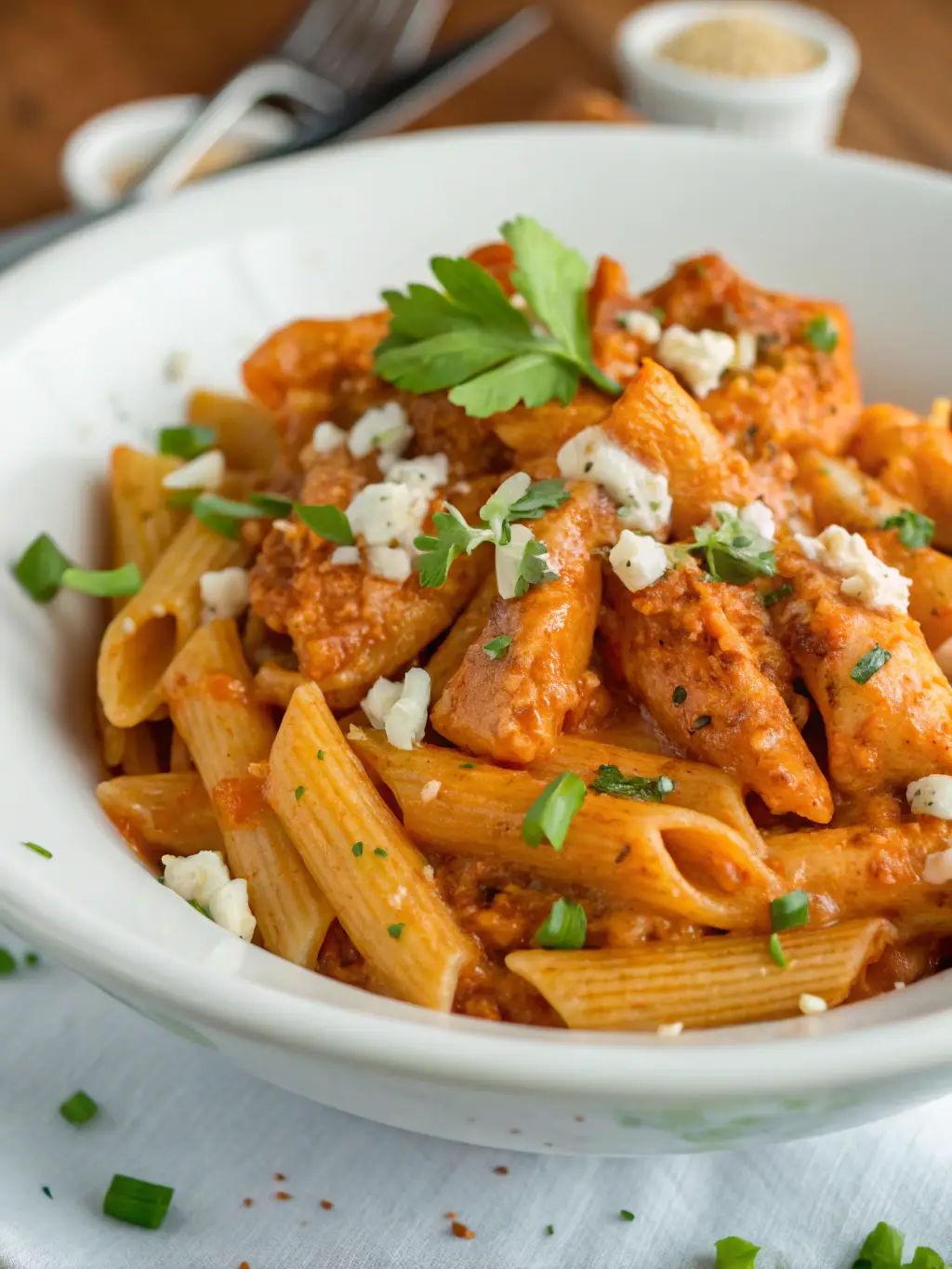
Penne in a buffalo cream sauce with shredded chicken and blue cheese, where the hot sauce is balanced by butter and dairy rather than diluted. The heat is adjustable in one ingredient.
- Chicken
- Main Dish
- Stovetop
Cook’s checkpoint
- Frying oil
- 350°F / 175°C
- Chicken, thickest part
- 165°F / 74°C
Use a food thermometer. Color and time alone don’t confirm poultry is done.
Ingredients
For the chicken
For the buffalo sauce
For the pasta
Instructions
Notes
- Cayenne pepper hot sauce is the specific style here — a vinegar-forward sauce rather than a thick sweet one. A sweeter sauce changes the dish considerably and will need the vinegar increased to compensate.
- The blue cheese goes in off the heat and only half of it is stirred through. Melted completely it turns the whole sauce sharp and gray; in streaks it stays a distinct flavor you meet in bites.
Cooking Mode
Questions
- How spicy is this?
- Assertive but not extreme — the butter, cream and cream cheese blunt a lot of the heat from half a cup of hot sauce. Adjust the hot sauce alone; everything else in the recipe stays the same.
- Can rotisserie chicken be used?
- Yes. About 3 cups of shredded meat, added at step 6 to warm through. Skip the searing entirely.
- What if I dislike blue cheese?
- Leave it out and add an extra half cup of shredded mozzarella or a mild cheddar at the same point. You lose the sharp counterpoint, so a little extra vinegar helps.
- Does the type of hot sauce matter?
- More than any other choice here. A thin, vinegar-forward cayenne sauce is what this is built around. Thick, sweet or smoky sauces produce a different dish and usually need less cream and more acid.