Creamy Sausage Rigatoni
The sausage leaves more behind in the pan than it takes with it. Everything after that is building on what it left.
Total: 40 minYield: 4 servingsMethod: Stovetop
In this recipe
What the browned residue is doing
When sausage browns properly it leaves a layer of stuck-on residue across the bottom of the pan. That layer is concentrated meat protein, rendered fat and caramelized sugars — the same reaction that makes a seared steak taste like a seared steak.
Most of the flavor in this dish is in that layer rather than in the sausage itself, which is why the meat is lifted out and the sauce is built directly on top of it. Wiping the pan or draining the fat throws away the part that made the trip worthwhile.
Browning it properly means resisting the urge to stir. Sausage broken up and pushed around constantly releases water and steams gray; left largely alone for eight to ten minutes over medium-high heat it develops real color and leaves a real fond.
The wine then lifts all of it back into the sauce. Reduced by half, it takes the residue off the pan and concentrates it — that is the whole purpose of deglazing, and skipping it leaves the best part welded to the skillet.
Thirty minutes, in sequence
One skillet, five stages, and the pasta pot running alongside.
- Sausage, 8-10 minutesMedium-high, minimal stirring. This is where the fond comes from and the stage most often cut short.
- Onion in the fatFive minutes. The rendered sausage fat is the cooking medium, and it carries the fennel and seasoning through the whole dish.
- Tomato paste, 2 minutesCooked until it turns brick-colored. Raw paste tastes tinny and that flavor persists through everything added afterwards.
- Wine, reduced by halfLifts the fond and concentrates it. Two minutes, and the pan bottom should be clean when it is done.
- Tomatoes, then creamEight minutes for the tomatoes to lose their raw edge, then three gentle minutes with the cream. Cream added early and simmered hard will split.
Troubleshooting
| Problem | Cause | Fix |
|---|---|---|
| The dish tastes thin | The sausage was stirred constantly and never browned. | Leave it alone. Eight to ten minutes with minimal movement is what builds the fond. |
| There is a metallic edge | The tomato paste went in raw. | Two minutes in the hot pan until it darkens. This is a short step with a large effect. |
| The sauce split | It boiled after the cream went in. | Gentle simmer only for the last three minutes, and add the parmesan off the heat. |
| The sauce slides off the pasta | No reserved pasta water was used. | The starch in that water is what binds sauce to pasta. A splash at a time while tossing. |
| It is greasy | A very fatty sausage plus the added olive oil. | Skip the tablespoon of oil if the sausage is fatty — it only needs a little to start. |
Storage and reheating
Refrigerate up to 3 days. Rigatoni holds up better than most shapes overnight because the tubes are thick-walled, but it will still absorb sauce and tighten.
Reheat to 165°F (74°C), the USDA safe temperature for leftovers, in a skillet over low heat with a splash of milk or water. The tomato in this sauce makes it a little more robust on reheating than a pure cream sauce.
It freezes acceptably for 2 months — better than most cream pastas, again because of the tomato. Expect the pasta to be softer and add a little cream when reheating to bring the sauce back together.
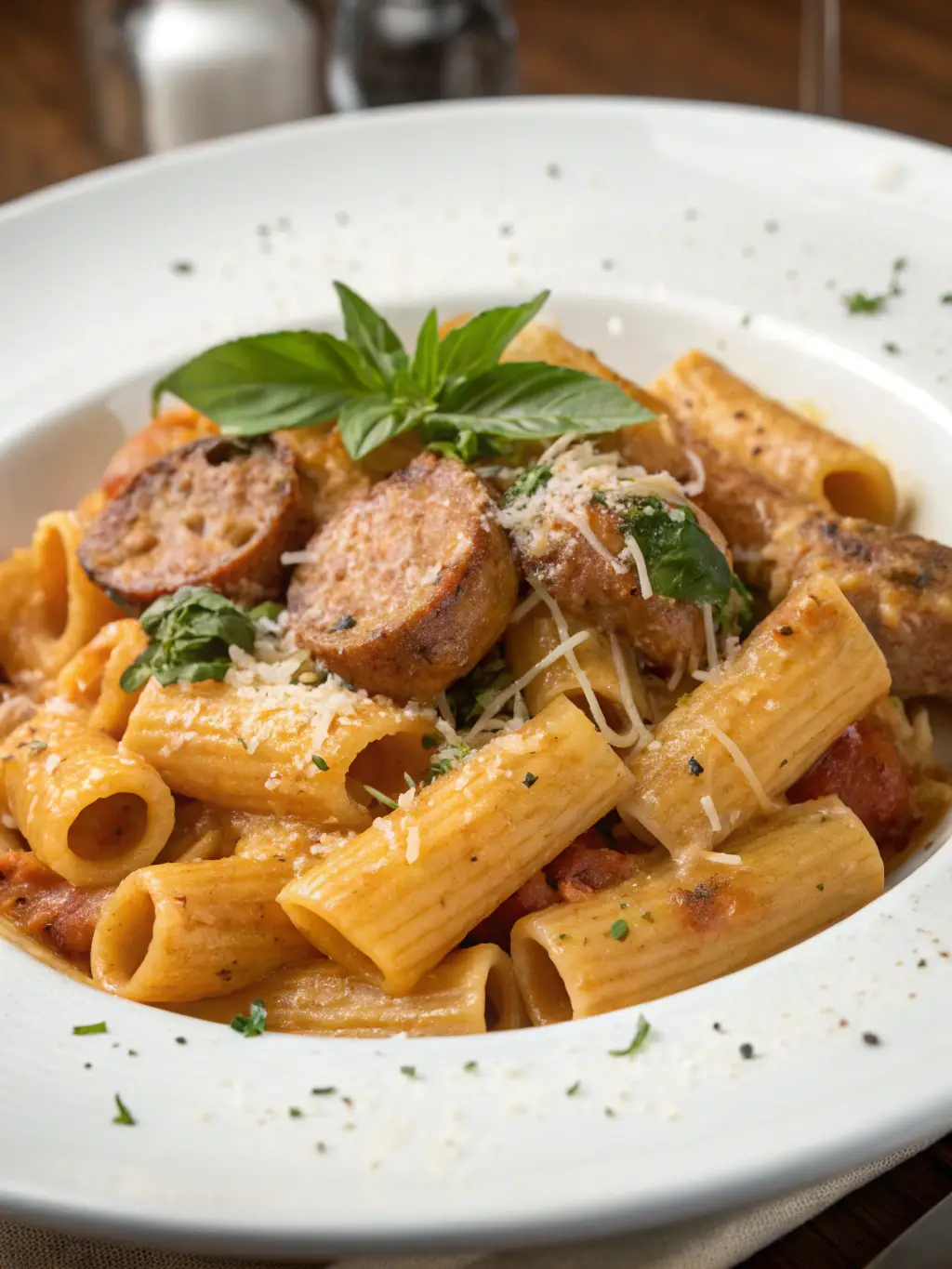
Creamy Sausage Rigatoni
Italian sausage browned hard, then a tomato-cream sauce built directly on what it leaves in the pan. Rigatoni is the shape because the ridges and the tube both hold a sauce this heavy.
- Beef
- Main Dish
- Stovetop
Cook’s checkpoint
- Frying oil
- 350°F / 175°C
- Chicken, thickest part
- 165°F / 74°C
Use a food thermometer. Color and time alone don’t confirm poultry is done.
Ingredients
For the sausage
For the sauce
For the pasta
Instructions
Notes
- Hot or sweet Italian sausage both work. Hot sausage plus the half teaspoon of red pepper flakes is a genuinely spicy plate; with sweet sausage the flakes give a background warmth instead.
- Do not drain the sausage fat. It is the cooking medium for the onion and carries the fennel and seasoning from the sausage into every part of the sauce.
Cooking Mode
Questions
- Why rigatoni specifically?
- The sauce is heavy and slightly chunky. Rigatoni's wide tubes trap it inside and the ridges hold it outside. Thin strands and smooth shapes both shed a sauce like this.
- Can the wine be left out?
- Yes — use a half cup of chicken broth with a teaspoon of red wine vinegar. Something acidic is needed to deglaze and to cut the cream, but it does not have to be wine.
- Hot or sweet Italian sausage?
- Either. Hot sausage with the red pepper flakes makes a genuinely spicy dish; sweet sausage lets the fennel come forward and the flakes sit in the background.
- Can this be made with ground turkey?
- It can, but turkey renders very little fat and browns poorly, which removes the fond this recipe is built on. If you use it, add two tablespoons of olive oil and expect a lighter result.